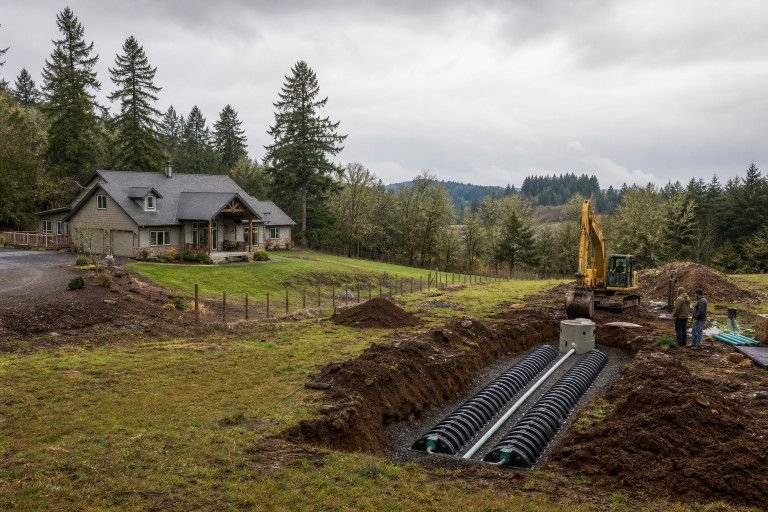
- A septic system must be designed around the specific site, not simply around the old tank or an assumed standard layout.
- Wet winters, groundwater, clay-heavy or slow-draining soils, slopes, and compact lots can affect the approved system design.
- Permits, site evaluations, inspections, and equipment access should be addressed before excavation begins.
- Lil’ Stinky Septic provides installation and replacement services for tanks, drainfields, lines, distribution components, and alternative system needs.
- Correct installation protects the home, the drainfield investment, nearby wells, and Portland-area waterways.
For Portland, Oregon, homeowners, a new or replacement septic system begins with much more than choosing a tank. Soil conditions, slope, seasonal groundwater, available drainfield space, household wastewater demand, and local approvals all help determine what can be installed safely and successfully. A thoughtful septic system installation Portland request should start with clear property information and a professional site-focused plan.
Lil’ Stinky Septic helps homeowners move from an early concern, such as backups, sewage odors, an aging tank, or new-construction planning, toward a completed system. The process can include evaluation, design support, permit coordination, tank and drainfield installation, required inspections, backfilling, and site cleanup. That full approach matters in the Portland area, where one property’s septic solution may be very different from the next.
Why Portland Homeowners May Need a New Septic System
Some Portland-area homes remain outside public sewer service or lack practical access to it. In those situations, the septic system is essential infrastructure. Homeowners in Portland and nearby communities across Multnomah, Clackamas, Washington, Marion, and Yamhill counties may request installation because they are building a home, replacing a failed system, or increasing the demands placed on an existing one.
Common reasons include an old steel tank that has corroded, recurring sewage backups, wet or odorous areas near the drainfield, slow indoor drains, damaged inlet or outlet lines, or a failed inspection during a real estate transaction. A planned addition, accessory dwelling unit, or larger household can also require an evaluation of whether the current system has adequate capacity.
Why Site Evaluation Comes Before Septic Installation
A conventional septic system generally uses a watertight tank and a drainfield, also called a soil absorption field. Wastewater solids settle in the tank, while liquid effluent moves toward the drainfield for treatment and dispersal through suitable soil. The U.S. Environmental Protection Agency’s explanation of how septic systems work shows why the drainfield and soil are as important as the tank itself.
Lil’ Stinky Septic starts by considering the practical facts of the property. This can include:
- Lot size, shape, and usable installation area.
- Soil depth, absorption characteristics, and drainage behavior.
- Seasonal groundwater levels and drainage patterns.
- Slopes, retaining walls, driveways, structures, trees, and landscaping.
- Access for excavation equipment and material delivery.
- Existing septic components, prior repairs, and available records.
- Household size, bedroom count, planned additions, and expected wastewater flow.
- Required setbacks from wells, waterways, property lines, and buildings.
Portland Soil, Rain, and Terrain Can Change the Plan
Portland’s rainy season is a central consideration for septic work. Wet ground can make excavation access more difficult and may reveal drainage limitations that deserve careful planning. Seasonal groundwater may restrict where a drainfield can be located, while dense or slow-draining soil can require a different approach than a conventional gravity system.
Sloped properties may need pumps, pressure distribution, or a specialized layout to move effluent as designed. Small or irregular lots can create spacing challenges when homes, garages, wells, trees, and driveways compete for usable area. These conditions do not automatically prevent septic installation. They do mean that the final system should follow documented site conditions, approved plans, and the requirements that apply to the property’s jurisdiction.
How Lil’ Stinky Septic Manages the Installation Process
- Request an estimate. Share the property address, current symptoms, construction plans, household details, and any available septic records.
- Review the site. The team evaluates access, soil-related considerations, tank placement, drainfield options, and system capacity needs.
- Develop the project plan. Necessary paperwork, component details, layout information, and supporting documents are organized for the project.
- Complete permitting steps. Permit requirements differ by location and project type. In Multnomah County, new systems, major repairs, and drainfield alterations commonly require site evaluation information and permit submittals. Portland’s septic permit guidance also explains that installation work with an issued permit generally requires a certified installer working for a DEQ-licensed installer business.
- Schedule construction. After approvals are in place, the installation is coordinated around site access, weather, materials, and inspection timing.
- Install and inspect. Lil’ Stinky Septic places the tank, connects lines, installs the drainfield and related components, and completes required inspections.
- Backfill and clean up. Once the work has passed inspection, disturbed areas are backfilled, leveled, and cleaned up.
Services That Support Portland-Area Properties
Septic installation is not a single service. Depending on the property and approved design, Lil’ Stinky Septic can help with:
- New septic system installation: Complete systems for eligible homes without sewer access.
- Septic tank replacement: A practical solution for aging, damaged, or corroded tanks, including older steel tanks.
- Drainfield installation: Creation or replacement of the soil treatment area needed for proper dispersal.
- Inlet, outlet, and distribution work: Connections that move wastewater from the home to the tank and drainfield.
- Pump-related work: Support for systems where gravity flow alone is not suitable.
- Alternative Treatment Technologies: Options that may be appropriate for constrained sites, difficult soils, shallow groundwater, or enhanced treatment needs.
When an Alternative System May Be Appropriate
An Alternative Treatment Technology system is not automatically better than a conventional system. It may, however, be considered when site conditions make a standard layout impractical or when the approval process calls for additional treatment. Limited soil depth, small lots, high groundwater, slow-draining soils, unusual terrain, or space restrictions near wells and waterways can all require closer design attention.
Lil’ Stinky Septic can help homeowners understand the difference between a conventional approach and an alternative option based on the actual property. The appropriate choice should be guided by the site evaluation, system design, approved components, and local requirements.
How Long Does Septic Installation Take?
Once permits are complete, the physical installation or replacement may often take a couple of days. The full project timeline can be longer because evaluation, plan preparation, permit review, weather, inspection availability, equipment access, soil conditions, and system complexity all affect scheduling. A straightforward tank replacement is not the same as a new system with a drainfield, pump, or alternative treatment components.
What to Prepare Before Requesting an Estimate
- The property address and a description of the current concern.
- Any prior permits, as-built drawings, inspection reports, pumping records, or repair invoices.
- Locations of the current tank, drainfield, well, streams, ponds, and major structures, if known.
- Information about household size, bedroom count, and planned additions or increased occupancy.
- Details about backups, odors, standing water, slow drains, or previous system failures.
- Access limitations, including gates, narrow driveways, landscaping, and utility locations.
Protecting Portland Homes and Local Water
A properly planned septic system helps reduce the risk of backups, surface sewage, property damage, and impacts to groundwater or nearby waterways. Installation is only the first step. Homeowners should also use water efficiently, keep heavy vehicles and structures off the drainfield, avoid flushing harmful materials, retain system records, and schedule pumping and inspections based on the system’s needs.
Frequently Asked Questions
Can Lil’ Stinky Septic replace an old steel tank?
Yes. Tank replacement is part of its septic installation services. An evaluation can determine the condition of the tank, connected lines, and drainfield before replacement work begins.
Does Lil’ Stinky Septic help with permits?
Its installation process includes support with project paperwork and permitting steps. The specific authority, documents, and approval requirements depend on the property location and scope of work.
What if a standard septic system will not work?
Alternative treatment options may be considered for sites with difficult soil, limited space, shallow groundwater, or other documented constraints. Final selection depends on the site evaluation and approval process.
Start With a Property-Specific Plan
For Portland homeowners facing a failing tank, drainage problems, a restricted lot, or a new construction project, the right first move is a professional evaluation and permit-ready plan. Lil’ Stinky Septic brings together installation knowledge, site planning, component work, inspections, and cleanup to help create a septic system designed for the property, Portland’s local conditions, and long-term use.