Everyday safety on New Zealand roads depends on two things working together: the skills a person brings to driving or riding, and the design of the spaces people move through. A new rider who understands the licensing steps is safer. So is a car park where the lines, arrows and accessible bays are clear enough to prevent a near miss.
Recent road-safety updates are also worth knowing about, including changes to some state highway speed limits and the start of roadside drug testing. This guide covers both sides of the picture: how the motorcycle licensing pathway works, and the practical marking basics that help keep car parks safe. Where useful, it points to official Waka Kotahi (NZTA) guidance and council design codes so you can check the detail before making a decision.
Key Takeaways
- The rider pathway is staged. You start with the Basic Handling Skills Test (BHST), move to a learner licence, then progress to restricted and full. Competency Based Training and Assessment (CBTA) is an approved route that can shorten the time between stages.
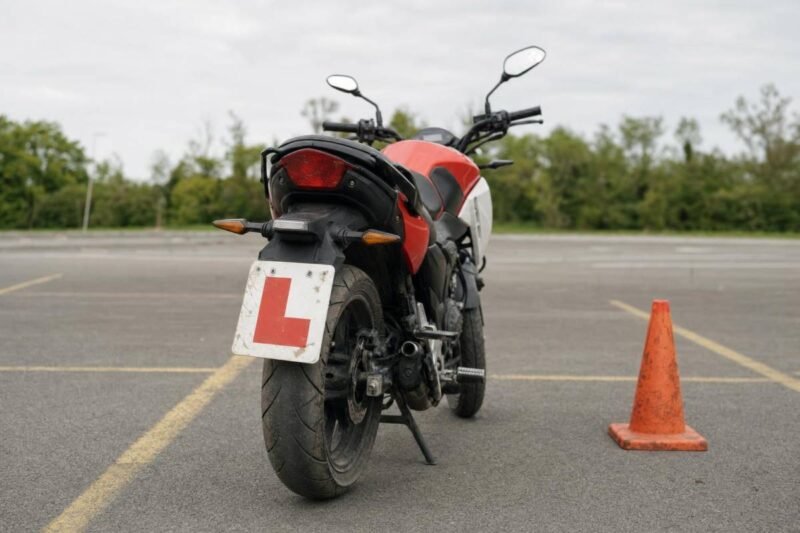
- Learner and restricted rules are strict for good reason. The minimum age is 16, learners cannot ride between 10pm and 5am, no passengers are allowed, an L plate must be displayed, and the bike must be LAMS-approved.
- Three car park marking basics matter most: keep pedestrian walkways obvious, size and sign accessible bays correctly, and use consistent arrows and bay lines so drivers know what to do.
- Recent policy has shifted. Some highway speed limits reverted to higher levels in 2025 while some stretches kept lower limits, and roadside drug testing has begun.
- Check official sources before acting. Waka Kotahi pages and council codes are the reference points for both riders and property managers.
Getting licensed to ride safely in New Zealand
The motorcycle licence in New Zealand follows a staged pathway designed to build skills before independence. Before you can apply for a learner licence, you must pass the Basic Handling Skills Test, which covers four staged exercises that check your control of the bike at low speed. Passing the BHST is the gate to everything that follows. It helps confirm that a rider can handle the machine before joining traffic.
The learner licence has a minimum age of 16 and comes with clear restrictions. Learners must not ride between 10pm and 5am, must not carry passengers, must display an L plate, and must ride a LAMS-approved motorcycle. LAMS stands for Learner Approved Motorcycle Scheme, which limits engine size and power for newer riders.
From there, riders progress to a restricted licence and then a full licence. There are two ways to move between stages: sit the standard practical tests, or complete CBTA. Waka Kotahi describes CBTA as an approved pathway that can reduce the time it takes to progress to restricted and full licences while reinforcing safe riding habits. If you want structured help with these stages, you can book your motorcycle license test today after checking the official pathway.
One wider policy point is worth separating from the motorcycle pathway. Broader driver-licensing changes announced in early 2026 are framed for car licensing and are set to take effect in January 2027. Do not assume these apply to motorcycles unless official guidance says so. The motorcycle pathway described here remains the reference until Waka Kotahi confirms otherwise.
Step-by-step: what to expect at each stage
The BHST comes first and focuses on low-speed control through its four staged exercises. It is a handling check, not a road test.
The learner stage adds a theory test and the on-road restrictions already noted: no riding between 10pm and 5am, no passengers, an L plate, and a LAMS-approved bike only.
For the restricted licence, you can sit the practical test or take the CBTA 6R assessment. Restricted riders may ride on their own only between 5am and 10pm, must not carry passengers, and must still ride a LAMS-approved motorcycle.
The full licence is reached either by the practical test or the CBTA 6F assessment. The common thread across every stage is simple: build competence first, then earn more freedom.
When to get coaching, and how to choose a provider
Structured training is not compulsory, but it helps many riders feel ready before a test. When comparing providers, use a short checklist: is the instructor an approved assessor, are loan bikes and gear available, and are Ride Forever courses offered? Ride Forever is the nationally recognised rider training programme.
If you want structured coaching to prepare for the BHST or CBTA in the South Island, Ornsby Motorcycle Training is a local provider that explains each licensing stage and offers Ride Forever training options. Ornsby Motorcycle Training positions its courses across the full journey, from the BHST through CBTA 6R and 6F, with training based in Christchurch, Wanaka and Invercargill for South Island riders. As with any provider, treat training as preparation rather than a guarantee of test success.
Car park safety: why lines, arrows and symbols matter
Rider safety and site safety share the same logic: clear design reduces conflict. In a car park, clear markings tell drivers where to go, show people on foot where it is safe to walk, and reduce the guesswork that leads to near misses. For small business owners and property managers, getting this right is a practical responsibility, not just a cosmetic one.
Two reference points guide the detail. The Traffic Control Devices Manual sets out how signs and markings should be provided, and road controlling authorities must comply with the Land Transport Rule: Traffic Control Devices 2004 when providing or maintaining these devices. Some parts of this manual are older, so check for updates. Local council codes fill in dimensions and layout logic. Auckland Transport’s 2026 Engineering Design Code, for example, gives a table of basic parking dimensions. For a 90-degree bay, common values include a 2.5m width, 5.0m depth, and about 5.2m of manoeuvring space in the aisle.

Make pedestrian routes obvious
The single most useful thing a car park can do is make walking routes obvious. Marked walkways, clear crossings and kept-clear sightlines all reduce the chance of a driver and a pedestrian meeting by surprise. This matters just as much for people arriving on bikes, who are smaller and easier to miss than a car. When the layout reads clearly, everyone slows down in the right places.
Get accessible parking right
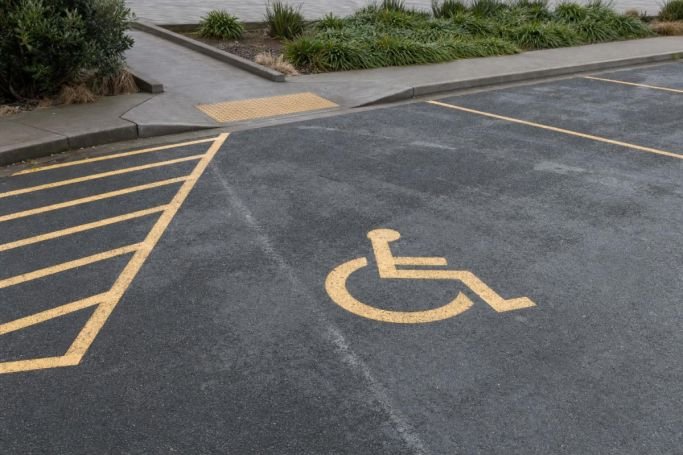
Accessible bays have specific requirements. MBIE guidance under NZS 4121 specifies accessible off-street car parks at 3.5m by 5m, recommends yellow paint with the International Symbol of Access, and requires an unobstructed accessible route to the building entrance. Proximity to the entrance matters, as does a firm, even surface and a manageable slope. These bays are not a place to save space. Getting them wrong can make a site unusable for some visitors.
Materials and maintenance notes
Line-marking contractors commonly use products specified to NZTA standards, including paints and longer-life marking systems, while the Traffic Control Devices Manual underpins the signs and markings themselves. For upkeep, a few simple habits help: repaint faded bay lines and legends before they become hard to read, check skid resistance on painted surfaces where people brake or turn, and allow proper curing time before reopening freshly marked areas so the work lasts.
When to call a specialist
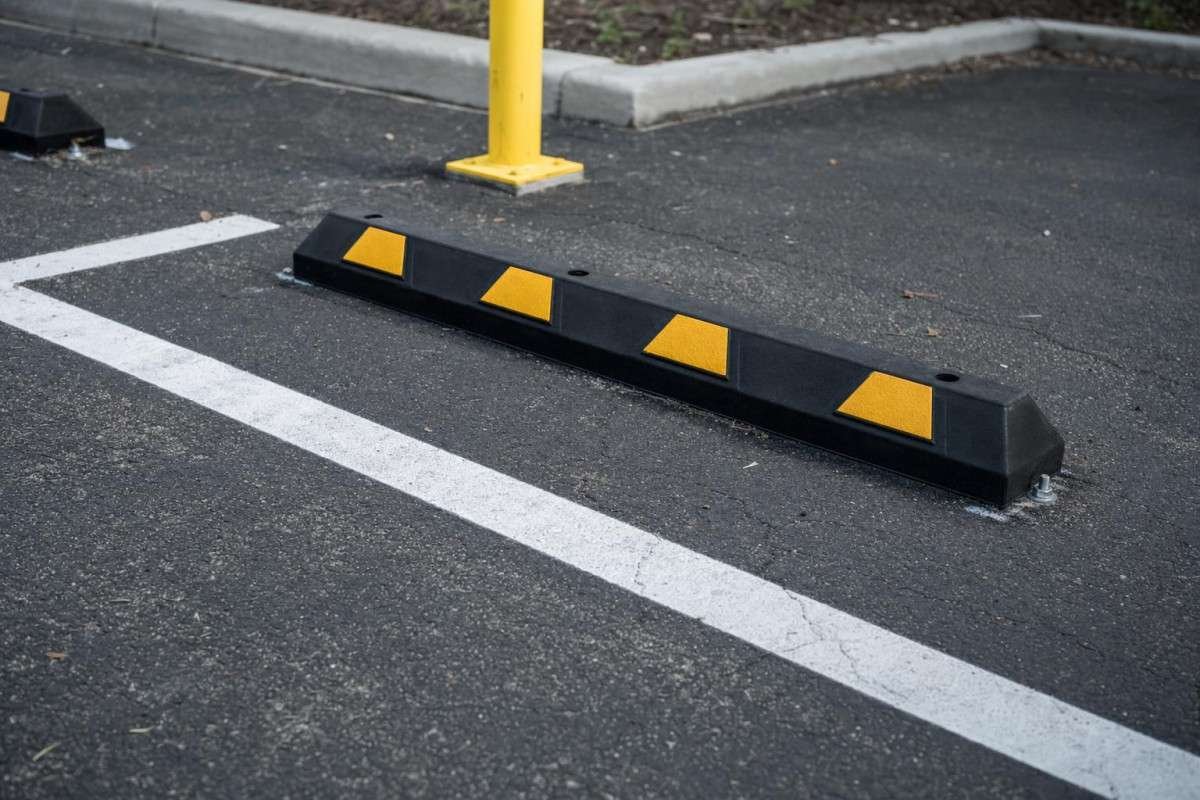
Some jobs are worth handing to a contractor, including reconfiguring aisles, adding a pedestrian crossing, refreshing worn legends, or installing wheel stops and bollards.
For projects in Wellington, Palmerston North, Taranaki or Waikato, Total Line Marking handles bay lines, walkways, loading zones, bollards, wheel stops and custom signage. Total Line Marking cites the use of NZTA and M7-approved products and lists coverage across Waikato, Taranaki, Palmerston North and Wellington, so confirm that any provider you approach serves your specific area before planning the work. After confirming your area and scope, you can find car park marking services near you for the relevant marking work.
What changed lately, and why it matters
A handful of recent updates affect how riders and drivers use the roads. Keeping to the confirmed facts:
- Speed limit reversals. In April 2025, Waka Kotahi announced that most of 49 state highway corridors would revert to their previous higher limits by 1 July 2025, while six would keep lower limits based on consultation.
- Some lower limits retained. In June 2025, it was reported that NZTA would keep lower speed limits on 13 highway sections, mainly short urban stretches near townships. If you drive familiar routes, check current signage rather than relying on memory.
- Crash data consistency. From 1 March 2025, the Crash Analysis System records any cyclist in a crash as a cyclist regardless of age, which improves consistency in the data used to understand road safety.
- Roadside drug testing. From 15 December 2025, police began saliva-based roadside testing for THC, methamphetamine, MDMA and cocaine, with a wider rollout expected during 2026. This applies to drivers and riders alike, so it is another reason to ride and drive clear-headed.
Bringing it together
Safer roads are built on both sides of the equation. A rider who works through the staged pathway, respects the learner and restricted rules, and trains before testing brings genuine skill to the road. A car park with obvious walkways, correctly sized accessible bays and consistent markings removes the small ambiguities that cause avoidable incidents.
Whether you are preparing for the BHST, weighing up CBTA, or planning to remark a car park, the safest next step is to check the current detail at the source. Waka Kotahi’s licensing pages and your local council’s design code hold the specifics. Training providers such as Ornsby Motorcycle Training can help riders prepare for formal checks, while marking contractors such as Total Line Marking can help turn layout requirements into a clearer site. Confirm the official guidance before you book training or start any car-park work.