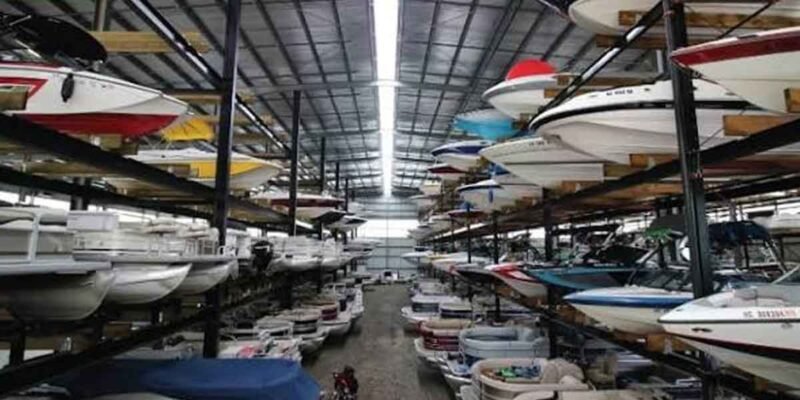
Indoor boat storage provides an enclosed space that protects watercraft and equipment from the elements and environmental damage. In-water storage keeps your vessel afloat so it is ready to sail when needed. Here is more information on indoor versus in-water boat storage facilities:
Clearance Height Limits
Indoor self-storage units provide a secure, protected environment that helps shield your equipment from weather exposure, water damage, and long-term wear. While some units may have height limitations due to fixed ceilings, many facilities offer a range of storage options designed to accommodate different types of watercraft. Unlike in-water storage, which leaves vessels exposed to constant moisture, marine growth, and changing conditions, dry land storage helps preserve your boat’s condition and reduce maintenance needs. Outdoor and covered storage options also accommodate oversized vessels.
Vessel Weather Protection
Enclosed boat storage provides a protected space that keeps your vessel sheltered from environmental exposure. It creates a barrier against rain, snow, and strong winds, helping preserve the boat’s appearance and condition. Storing a vessel in an open environment subjects it to ongoing weather changes and outdoor conditions.
Outdoor boat storage facilities do not provide the same level of coverage as enclosed spaces. Open storage leaves seating materials exposed to sunlight, precipitation, and temperature changes that contribute to general wear over time. Moisture exposure also requires additional preparation to protect interior components. When a watercraft remains in an uncovered area, owners often depend on canvas covers to help protect interior surfaces, vinyl, and the vessel coating.
Boat Storage Security
When you choose indoor storage, your watercraft remains in a secure, enclosed environment that provides an added layer of protection. Drive-up units keep your vessel out of public view and behind durable doors, creating a private storage space for your boat and equipment. This enclosed setting helps keep fishing gear, wakeboard equipment, and other belongings stored safely with the vessel. In-water storage spaces leave watercraft in a visible location; stored items also remain easier for others to see. Indoor storage offers greater privacy and a more controlled environment for protecting your vessel and personal equipment.
Dockside Boarding Process
Indoor boat storage keeps your watercraft on a trailer inside a secure, enclosed building when it is not in use. Owners back their boats into a building where walls and doors create a barrier from outdoor conditions. This setup requires additional steps before each trip, including attaching the trailer, transporting the boat to a ramp, and completing the launch process.
In-water storage keeps a vessel at a marina slip for direct dock access. Indoor storage provides a practical solution for owners who value protection, organization, and flexible use of their storage space. Key benefits of indoor unit placement include:
- Extra space for boating supplies and equipment
- Dedicated room for trailer storage
- Storage options for smaller watercraft
Explore Boat Storage Facilities
When choosing boat storage, evaluate both the level of protection you want and the size of your vessel. Indoor facilities require accurate measurements to confirm that your boat fits within the available space. Taller watercraft may also require adjustments, such as removing certain components, to meet storage requirements. Contact a reputable boat storage provider to learn more about their available units.