Traveling alongside large trucks is a common part of driving, but it comes with unique challenges that require heightened awareness from all motorists. These massive vehicles have substantial blind spots, known as “No-Zones,” which can put nearby drivers at risk if not properly understood. By learning and adopting safe driving strategies, you can help prevent hazardous situations and contribute to a safer roadway for everyone. For more information about these risks, see Blind Spot Truck Accidents in Texas. No-Zones surround a truck, and drivers must be especially mindful of the extensive blind spots on the right side and directly behind or in front of the truck. Responsible driving around these large vehicles means not only protecting yourself but also looking out for other drivers, cyclists, and pedestrians who could be caught in a truck’s blind spot. These critical areas demand your attention and respect during any trip. Even experienced drivers can underestimate how limited a truck driver’s view really is. Standard mirrors do not compensate for the full length and height of commercial trucks, making it essential for all motorists to follow best safety practices. Taking action to avoid blind spots can reduce the chances of serious accidents and ensure smoother traffic flow for everyone on the road. By making a habit of safe approaches to passing, maintaining proper following distances, and giving trucks plenty of room, drivers do their part to promote road safety and avoid dangerous encounters.
Understanding Truck Blind Spots
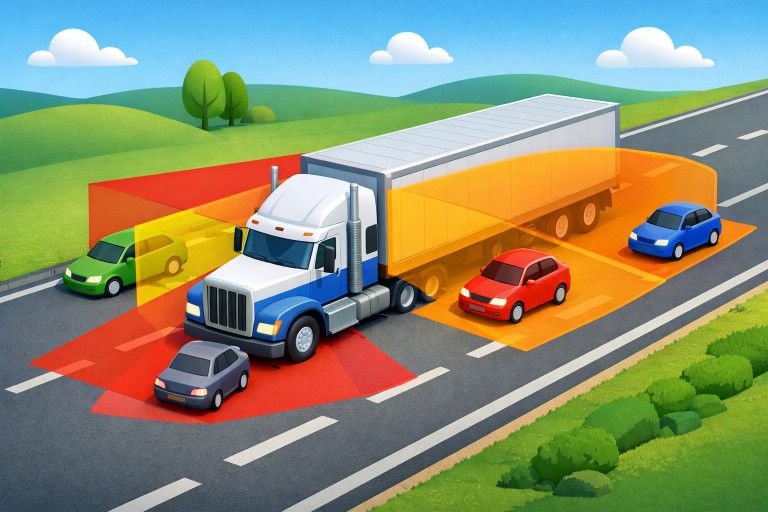
Commercial trucks are designed for heavy-duty tasks, but they sacrifice visibility to accommodate cargo space and size. The result is substantial blind spots, where the truck driver cannot see other vehicles, regardless of mirror use. These include:
- Front Blind Spot: Extends about 20 feet directly in front of the truck’s cab, meaning a vehicle stopped too close may not be visible to the truck driver.
- Rear Blind Spot: Spans approximately 30 feet behind the trailer, posing a significant risk when following closely.
- Left Side Blind Spot: A lane-wide area starting from the cab and running to the middle of the trailer. While smaller than the right-side blind spot, it is still dangerous.
- Right Side Blind Spot: Covers two lanes wide along the full length of the truck. This is the most hazardous spot for passenger vehicles to linger.
If you cannot see the truck driver in their side mirror, assume they cannot see you. Making yourself visible is essential for your safety and for the safe operation of the truck.
Safe Passing Practices
- Always pass on the left: The right has the largest blind spot, so passing there is extremely risky. The left side offers better visibility and a safer overtaking route.
- Signal well in advance: Use your turn signals early to alert the truck driver of your intentions, helping to avoid confusion and abrupt maneuvers.
- Pass quickly and decisively: Do not linger beside the truck. Complete your pass as swiftly and safely as the conditions allow, minimizing time spent in blind spots.
- Ensure clear visibility: Before pulling back in front of a truck, wait until you can see the entire front of the cab in your rearview mirror. This ensures there is enough space for safe merging.
Maintaining Safe Following Distances
Trucks take much longer to stop due to their weight and momentum. Following too closely is a common and dangerous mistake. Maintain at least a four-second gap from the back of the truck, and increase this distance during rain, fog, or other poor weather conditions. This space will give you more time to react if the truck suddenly brakes or encounters an obstacle. Staying back also prevents your vehicle from being invisible in the rear blind spot.
Anticipating Wide Turns
Trucks require substantially more room to make turns, particularly right turns. Because of this, the trailer often swings into adjacent lanes or starts the turn from further out in the lane than smaller vehicles typically do. Never try to squeeze between a truck and the curb or cut behind a turning truck. If you see a truck signaling a turn, give it plenty of room and do not attempt to navigate alongside it until the maneuver is complete.
Staying Visible and Predictable
Maximize your visibility by avoiding sudden moves, unpredictable stops, or abrupt lane changes, especially in front of trucks. Use your headlights in poor visibility, and keep your vehicle’s lights and signals in working order. Predictable driving not only helps truck drivers react to your movements but also keeps traffic flow safer for all road users.
Being Patient and Courteous
Recognize and respect that trucks have slower acceleration, limited maneuverability, and require longer distances to accelerate or decelerate. Be patient when a truck is merging, changing lanes, or struggling up a hill. Avoid hostile driving behaviors such as cutting off or tailgating trucks. Safe driving around trucks is as much about attitude as it is about skill. If all drivers were more courteous and patient, roadways would be much less dangerous. For more insights on large vehicle safety, review the National Highway Traffic Safety Administration’s SaferTruck resources.
Conclusion
Understanding the extent of truck blind spots, practicing patience, and following essential road safety tips can significantly reduce the chance of accidents with large trucks. By adopting these habits, you help create a safer journey for yourself, truck drivers, and everyone sharing the road.