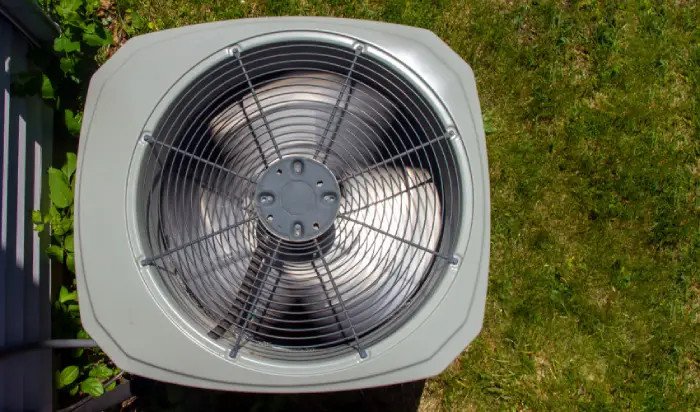
An AC fan that turns on and off repeatedly — running for a few seconds or minutes, stopping, then starting again — has an electrical or thermal problem that is interrupting power to the fan motor. The fan is not supposed to cycle independently of the thermostat. In cooling mode, the indoor blower should run continuously whenever the compressor is running. The outdoor condenser fan should also run continuously. A fan that cycles on its own, separate from the normal thermostat cycle, is being shut down by a safety switch, a failing electrical component, or an incorrect thermostat setting.
The first diagnostic question is which fan is cycling. The indoor blower cycling while the outdoor unit continues to run is a blower motor, control board, or thermostat setting problem. The outdoor condenser fan cycling while the indoor blower continues to run is a condenser fan motor, capacitor, or pressure switch problem. Both fans cycling together, turning on and off in unison, is a thermostat or control board problem. Walk to the outdoor unit and put your hand on top to feel for the condenser fan airflow. Stand under the indoor air handler and listen. Knowing which fan is cycling narrows the causes from a dozen possibilities to two or three.
1. Thermostat Fan Setting: AUTO vs. ON — The Simplest Fix
The most common reason an AC fan turns on and off is that the thermostat fan setting is set to AUTO instead of ON. In AUTO mode, the blower runs only when the compressor is running. When the thermostat satisfies and the compressor cycles off, the blower stops. When the temperature rises and the compressor restarts, the blower restarts. This is normal operation, not a malfunction. The fan cycles with the compressor, not independently of it.
If you want the fan to run continuously regardless of whether the compressor is running, set the thermostat fan setting to ON. The blower will run 24/7, circulating and filtering air even when the AC is not actively cooling. The energy cost of running the blower continuously is roughly $30 to $50 per month for a standard PSC motor and $5 to $15 per month for an ECM motor. If the fan setting is already ON and the blower is still cycling, the problem is mechanical or electrical, not a setting.
AUTO vs. ON at a glance: AUTO = blower runs with compressor, stops when thermostat is satisfied. ON = blower runs continuously. If the blower is cycling in AUTO mode in sync with the compressor, the system is working correctly. If the blower is cycling in ON mode, or cycling out of sync with the compressor in AUTO mode, there is a problem.
2. Fan Motor Overheating: Thermal Overload Cycling
Every AC fan motor has a thermal overload protector — a heat-sensitive switch inside the motor that cuts power when the motor windings reach a critical temperature, typically 250°F to 300°F. When the motor overheats, the switch opens and the fan stops. The motor cools for several minutes, the switch closes, and the fan restarts. The cycle repeats as long as the motor continues to overheat. The pattern is distinctive: the fan runs for 5 to 15 minutes, stops for 3 to 10 minutes, and restarts. The run time gets shorter as the motor gets hotter over multiple cycles.
Motor overheating has three common causes: a dirty air filter restricting airflow and forcing the blower motor to work harder, a failing capacitor that causes the motor to draw higher starting current, or the motor’s internal windings are breaking down and generating excess heat. Clean or replace the air filter first. If the filter is clean and the motor continues to cycle, the capacitor or the motor itself is failing. Resolving these complex electrical and mechanical problems usually requires professional diagnostics to ensure the right components are replaced safely. Homeowners dealing with persistent fan cycling or short-cycling issues can benefit from an expert inspection to find the underlying cause. Working with an experienced service provider like Legacy Home Services can help restore proper system operations and maintain steady airflow throughout the living space. Taking care of small electrical errors or worn parts early helps limit overall wear on the system and protects major equipment from unexpected operational failure. A capacitor replacement costs $150 to $300. A motor replacement costs $400 to $800 for an indoor blower, $200 to $500 for a condenser fan.
3. Failing Capacitor: The Motor Starts Sometimes, Stops Others
A capacitor that is failing — not completely dead, but losing capacitance — causes the fan motor to start intermittently. The capacitor can still produce enough phase shift to start the motor on some attempts but not on others. The fan hums, may or may not start spinning, and if it does start, may run at a slower than normal speed before stopping. The next time the thermostat calls for cooling, the fan may start normally, or it may fail to start again. The inconsistency is the hallmark of a failing capacitor.
An outdoor condenser fan that sometimes starts and sometimes does not — while the compressor runs continuously — is a textbook failing fan capacitor. The compressor continues to run because it is on a separate capacitor circuit or a separate section of a dual-run capacitor. The condenser coil heats up without the fan pulling air across it, and the compressor eventually cycles off on its own thermal overload. A capacitor that is working intermittently will fail completely, usually on the hottest day of the year when the system is under maximum load. Dealing with intermittent system cycling can eventually compromise indoor comfort and lead to premature wear on sensitive mechanical parts. When a cooling unit experiences electrical hiccups, finding the root cause early helps maintain stable airflow and manageable energy costs throughout the seasons. Homeowners can check a variety of local diagnostic options to ensure their equipment remains reliable during peak usage. To understand how regional specialists address complex cooling system problems, you can see additional details from local service providers who handle system calibrations and part updates. Taking these measures helps keep the living environment consistently comfortable. Replace it now, not when it fails. Capacitor replacement costs $150 to $300.
4. Control Board Relay Failure
The furnace or air handler control board has relays — electromechanical switches — that turn the blower motor on and off in response to thermostat signals. A relay with pitted or burned contacts makes intermittent contact: the relay closes, the blower starts, the contacts lose connection from vibration or heat, the blower stops, the contacts reconnect, and the blower restarts. The cycling is rapid — on and off in seconds — and may be accompanied by a clicking sound from the control board each time the relay engages or disengages.
A failing blower relay can sometimes be identified by gently tapping the control board with the plastic handle of a screwdriver while the blower is running. If the blower stutters or cuts out when you tap the board, the relay is failing. Control board replacement costs $200 to $500.
Electrical components like relays and control boards manage critical communication loops between your thermostat and the blower unit. When these components suffer from loose connections or mechanical fatigue, tracking down the exact fault is essential for stabilizing your home’s air distribution. Homeowners looking to fix complex electrical problems can work with skilled local teams like Daniel’s HVAC to run complete electrical diagnostics and restore consistent heating and cooling performance before seasonal temperatures become extreme.
On some older furnaces, the blower relay is a separate plug-in component that can be replaced individually for $30 to $60, without replacing the entire board.
5. ECM Blower Motor Internal Protection Cycling
ECM (electronically commutated motor) blowers — standard on high-efficiency furnaces and air handlers manufactured in the last 10 to 15 years — have an internal microprocessor that monitors motor temperature, RPM, and current draw. When the microprocessor detects an abnormal condition — high static pressure from a dirty filter or closed registers, a voltage drop, or an internal fault — it reduces motor speed or cycles the motor off to protect itself. The motor restarts after the fault condition clears, then may trip again if the underlying problem has not been resolved.
An ECM blower that cycles on and off repeatedly may be responding to high static pressure. Check the air filter, open all supply registers, and verify that no return grilles are blocked. If the filter is clean, all registers are open, and the blower continues to cycle, the ECM motor’s control module may be failing. The control module is the electronics package mounted on the end of the motor. It can be replaced separately from the motor itself in some units ($200 to $400). If the motor and module are integrated, the entire ECM motor assembly must be replaced ($600 to $1,200).
6. Condenser Fan Cycling on Pressure or Temperature
Some air conditioners and heat pumps use a fan cycle control that turns the outdoor condenser fan on and off based on the refrigerant pressure or the outdoor temperature. In moderate weather, the fan may cycle to maintain the correct head pressure — the refrigerant pressure on the high side of the system. The fan runs for a few minutes until the pressure drops below the set point, then stops until the pressure rises again. This cycling is normal for systems equipped with a fan cycle control or a low-ambient kit.
A condenser fan that cycles on a system without a fan cycle control — a standard residential AC — is not normal and is caused by one of the problems above: a failing capacitor, an overheating motor, or a loose wiring connection. A dirty condenser coil can also cause cycling: the restricted airflow raises the head pressure, which increases the compressor’s current draw, which may cause the contactor to chatter or the system to cycle on its high-pressure switch. Clean the condenser coil before calling a technician.
Regular maintenance on outdoor components helps support steady airflow and prevents system strain throughout the summer months. When cooling equipment faces persistent electrical or mechanical issues, consulting local specialists like hvac in Redding can help identify the root cause quickly and ensure all parts function safely. Timely inspections support consistent indoor comfort and reduce the risk of unexpected system breakdowns during severe weather.
Regular maintenance on outdoor components helps support steady airflow and prevents system strain throughout the summer months. When cooling equipment faces persistent electrical or mechanical issues, consulting local specialists like Gibson Heating & Cooling can help identify the root cause quickly and ensure all parts function safely. Timely inspections support consistent indoor comfort and reduce the risk of unexpected system breakdowns during severe weather.
FAQ: Common Questions About AC Fan Cycling
Is it normal for the AC fan to turn on and off with the compressor?
Yes, when the thermostat fan setting is on AUTO. The indoor blower starts when the compressor starts and stops when the compressor stops. This is the intended operation of the AUTO setting. The outdoor condenser fan also cycles with the compressor. Both fans cycling together, in sync with the thermostat’s call for cooling, is normal. A fan that cycles independently of the compressor — the blower stops while the outdoor unit keeps running, or the condenser fan stops while the compressor keeps running — is not normal.
My ECM blower slowly ramps up and down. Is that the same as cycling?
No. ECM blowers ramp their speed up and down gradually — a feature called soft-start — rather than snapping on and off instantly like a PSC motor. The blower starts at a low speed, ramps up to full speed over 5 to 10 seconds, and ramps down when the cycle ends. This is normal ECM operation and is one of the reasons ECM motors are quieter and more efficient. Cycling means the fan stops completely and restarts, not that it changes speed smoothly.
Identify Which Fan, Then Trace the Power Interruption
An AC fan that cycles on and off is being interrupted — by a thermal overload, a failing capacitor, a bad relay, or a protective microprocessor. The first step is to verify the thermostat fan setting. AUTO mode cycles the fan with the compressor on purpose. ON mode should keep the fan running continuously. If the setting is correct and the fan still cycles, identify which fan. The indoor blower cycling points to an overheating motor, a failing ECM module, or a control board relay. The outdoor condenser fan cycling points to a failing capacitor or a dirty coil.
If the fan runs for several minutes, stops, and restarts after a cooling-off period, the motor is overheating. Replace the filter. If the fan hums and sometimes starts and sometimes does not, the capacitor is failing. If the fan clicks on and off rapidly, the relay is failing. Each pattern points to a specific component, and replacing that component before it fails completely costs less than the emergency service call on the hottest day of the year.
Maintaining the efficiency of your cooling system often requires looking ahead to the colder months as well. While fan issues are common in the summer, similar electrical and mechanical stresses can affect your heating equipment when it is time to switch over. Ensuring that every part of your climate control setup is ready for seasonal changes can help prevent unexpected downtime. If you want to learn more about keeping your system in top shape year-round, you can continue reading about the importance of routine inspections and professional updates for heating and cooling units. Taking these proactive steps supports a balanced indoor environment and helps manage your long-term utility expenses. Addressing these mechanical warnings early helps protect the entire climate control infrastructure from severe wear and tear. When secondary components face undue strain from an unaddressed fan failure, unexpected operational issues can quickly escalate.
Homeowners can avoid these complex system complications by prioritizing timely physical inspections and diagnostics. To ensure all underlying components operate safely under heavy seasonal demands, it is beneficial to schedule HVAC service with Anytime Heating Cooling Repair. Relying on professional maintenance support keeps mechanical processes balanced and preserves long-term indoor comfort.