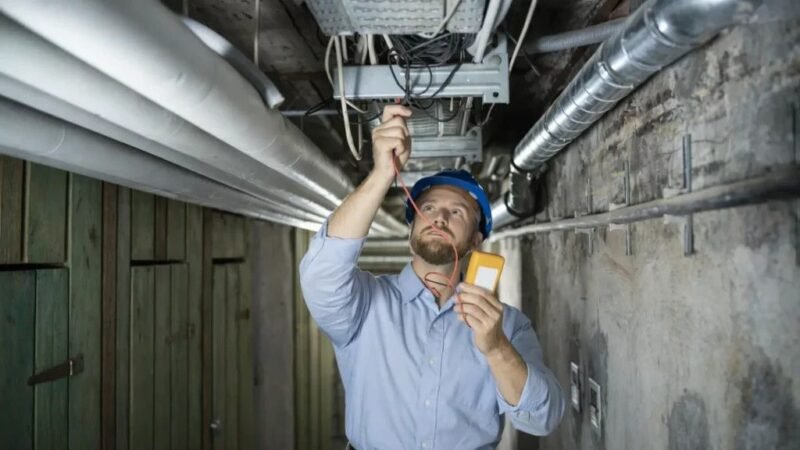
Replacing existing HVAC ductwork costs $4,000 to $12,000 for a typical 2,000-square-foot home, with the national average around $6,500. The cost is higher than new-construction ductwork installation because replacement involves tearing out and disposing of the old ductwork, working around finished walls and ceilings, and — in older homes — potentially dealing with asbestos-wrapped ducts that require professional abatement before the new ducts can be installed. The tear-out and disposal of old ductwork adds $1,000 to $2,500 to the project cost compared to an installation in a home with no existing ducts.
Beyond the visible price tag of materials, the specific layout of your residence significantly dictates the final investment required for a full ductwork overhaul. Homes featuring multi-level designs or inaccessible crawl spaces demand more labor-intensive strategies to ensure every connection remains airtight and efficient. Professionals like Titan Mechanical Services often emphasize that proper load calculations and airflow balancing are just as critical as the physical installation itself. Neglecting these technical nuances can lead to uneven cooling and higher utility bills over time. By addressing structural complexities during the planning phase, homeowners can better anticipate total expenses and ensure their new ventilation system operates at peak performance for years to come.
The decision to replace ductwork rather than repair it is driven by the condition of the existing ducts. Ducts that are collapsed, rusted through, infested with mold or vermin, or wrapped in deteriorating asbestos insulation must be replaced. Ducts that are leaking at accessible seams can be sealed with mastic for $300 to $800. Ducts that are undersized for a new HVAC system should be replaced rather than adapted — connecting a new high-efficiency system to old undersized ducts guarantees the new system will never perform to its rated efficiency. The ductwork is the delivery system. If the delivery system is broken, the equipment cannot do its job regardless of how efficient it is.
Replacement vs. New Installation: Why Replacement Costs More
| Cost Factor | New Construction Ductwork | Replacement Ductwork |
| Access to installation path | Open walls, unrestricted | Finished walls, limited access |
| Old duct removal | None | $1,000-$2,500 |
| Asbestos abatement (if present) | None | $5,000-$15,000 |
| Drywall repair | None | $500-$2,000 |
| Typical total (2,000 sq ft) | $3,000-$6,000 | $4,000-$12,000 |
The retrofit premium — the additional cost of replacing ductwork in a finished home — is 50% to 100% above the cost of new-construction installation. In new construction, the ductwork goes in before the drywall, and the installer has unrestricted access. In a replacement, the installer must remove the old ducts through existing access points — crawlspace hatches, attic scuttles, basement stairways — fish new ducts through finished wall cavities, and cut strategic access holes in drywall. Each access hole must be patched and painted after the ducts are installed. The drywall repair alone adds $500 to $2,000 to the project cost.
The total investment for a full ductwork overhaul often hinges on regional labor markets and the specific architectural challenges of the property. Homeowners in the South frequently face high humidity levels that accelerate material degradation, making regular system inspections a priority for maintaining indoor air quality. When assessing long-term climate control performance, many residents seek professional air conditioning repair services in Humble TX to ensure their ventilation networks remain airtight and efficient throughout the peak summer months. These proactive measures can help prevent the steep costs associated with emergency replacements while also optimizing the overall energy consumption of the entire household cooling system.
Asbestos-Wrapped Ductwork: The Cost Multiplier
Homes built before the 1980s may have ductwork wrapped in asbestos-containing insulation — a white, chalky, cloth-like material that looks like plaster-soaked gauze wrapped around the duct seams and joints. Asbestos duct wrap is a regulated hazardous material. It cannot be removed by a standard HVAC contractor. It must be removed by a licensed asbestos abatement contractor following EPA and OSHA protocols: containment barriers, negative air pressure, HEPA filtration, and proper disposal at a hazardous waste facility.
Beyond the initial installation costs, the longevity of a ventilation system depends heavily on proactive upkeep and addressing minor issues before they escalate. While most homeowners focus on the price per linear foot, neglecting secondary components like plenums or air handlers can lead to premature wear and tear. Seeking professional HVAC repair services in Camas WA ensures that airflow remains balanced and that energy efficiency isn’t compromised by undetected leaks or poor insulation. This localized expertise helps in navigating regional climate demands, ultimately protecting the investment made in new ductwork. Consistent evaluations prevent the need for more expensive structural overhauls down the road, keeping long-term maintenance budgets manageable and predictable.
Asbestos abatement for ductwork costs $5,000 to $15,000 depending on the extent of the ductwork, the accessibility, and local disposal fees. The abatement must be completed before the new ductwork can be installed. A contractor who offers to “just tear it out” without abatement is violating federal law and exposing the household to airborne asbestos fibers. Asbestos fibers inhaled into the lungs cause mesothelioma, a fatal cancer. The $5,000 to $15,000 abatement cost is not optional. It is a legal and health requirement.
How to identify asbestos duct wrap: Look at the ductwork in the basement or attic. Asbestos wrap is white or gray, looks like cloth or paper-mache, and is typically found at the duct joints and seams. It may be fraying or deteriorating, with visible fibers. Do not touch it. Do not disturb it. If you suspect asbestos, have a sample tested by a certified laboratory before any ductwork replacement is scheduled. The test costs $50 to $100 and tells you definitively whether abatement is required.
Partial vs. Full Ductwork Replacement Costs
| Scope | What Is Replaced | Typical Cost |
| Partial — supply ducts only | All branch supply ducts, existing trunk line reused | $2,500-$5,000 |
| Partial — return ducts only | Return ducts and grilles, supply ducts reused | $1,500-$3,500 |
| Partial — trunk line only | Main supply and return trunks, branch ducts reused | $1,500-$4,000 |
| Full replacement | All supply, return, trunk, fittings, registers, grilles | $4,000-$12,000 |
Partial replacement is cost-effective when the problem is isolated — the trunk line is rusted out but the branch ducts are intact, or the flex duct branch runs have collapsed but the metal trunk is solid. Mixing old and new ductwork requires careful sizing: the new sections must match the existing sections in dimensions and airflow characteristics. A new trunk line that is larger than the old one will not improve airflow if the existing branch ducts are undersized. A new branch duct that is larger than the old one may steal airflow from other branches. A Manual D calculation should be performed for any ductwork replacement, partial or full.
While upgrading the physical components of your climate control system is essential, the surrounding infrastructure often requires equal attention to ensure long-term efficiency. Many homeowners mistakenly overlook how an aging heating unit can place undue stress on new air ducts, leading to premature wear or restricted airflow. Coordinating a professional Furnace repair service during the ductwork evaluation process helps identify these hidden system imbalances before they escalate into expensive mechanical failures. Addressing these interconnected issues simultaneously not only stabilizes your indoor environment but also maximizes the return on your investment. This comprehensive approach ensures that every part of the network functions in harmony, providing consistent comfort throughout the varying seasons.
Replacement Ductwork Material Costs
| Material | Cost per Linear Foot (Installed) | Best For |
| Flex duct (R-6 insulated) | $10-$18 | Attic and crawlspace branch runs |
| Galvanized steel (rectangular) | $18-$28 | Basement trunk lines, accessible spaces |
| Galvanized steel (round spiral) | $22-$38 | Exposed ducts, aesthetic applications |
| Fiberglass duct board | $14-$22 | Budget replacement, insulated |
Replacement costs more per linear foot than new construction because the installer is working in confined, finished spaces and the duct runs must navigate existing framing, plumbing, and electrical. A flex duct run that takes 10 minutes to install in an open attic during new construction takes 30 minutes to fish through a finished ceiling during replacement. The labor, not the material, drives the per-foot replacement cost.
FAQ: Common Questions About Ductwork Replacement
How do I know if my ductwork needs to be replaced rather than repaired?
Replace ductwork that is collapsed, rusted through, infested with mold or vermin, wrapped in deteriorating asbestos, or undersized for a new HVAC system. Repair ductwork that has accessible leaks at seams or joints — seal with mastic for $300 to $800. A duct leakage test — a technician pressurizes the duct system and measures the air leakage — quantifies the problem. Leakage above 20% to 25% of total airflow is severe and may justify replacement if the leaks are inaccessible. Leakage below 10% is normal and can be addressed with targeted sealing.
Can I replace ductwork myself to save money?
Replacing accessible flex duct in an open attic or crawlspace is within the capability of an experienced DIY homeowner. The materials are inexpensive, the connections use zip ties and mastic, and the work is physically demanding but not technically complex. Replacing rigid metal ductwork, ducts in finished walls, or any duct system connected to a furnace or AC requires professional fabrication and installation. A DIY duct replacement that is improperly sized, poorly sealed, or not balanced will perform worse than the old, leaky ductwork it replaced.
Replacement Is an Investment in the Air Distribution System
Replacing HVAC ductwork costs $4,000 to $12,000, with the final price determined by the scope of the replacement, the accessibility of the existing ducts, and whether asbestos abatement is required. A partial replacement of accessible flex duct in an open attic costs $2,500 to $5,000. A full replacement of rigid metal ductwork in a finished home with asbestos abatement costs $10,000 to $27,000.
The ductwork is the delivery system for every BTU of heating and cooling the equipment produces. Old, leaky, undersized ducts waste 20% to 40% of that energy into the attic or crawlspace. Replacing them with properly sized, sealed, and insulated ducts pays for itself in energy savings over the 20- to 50-year lifespan of the new ductwork. The ducts are not an accessory to the HVAC system. They are the system. The equipment is just the engine.