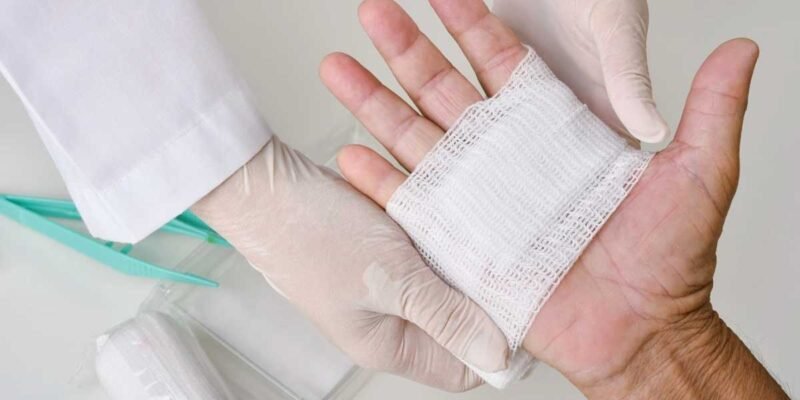
Wound care addresses cuts, ulcers, surgical sites, and other skin injuries. It supports tissue repair, and it may lower the chance of added damage when clinicians track drainage, swelling, and pain. Since wounds change over time, treatment often includes cleaning, dressing selection, pressure relief, and follow-up visits. Here is more information on the role of wound care in recovery:
Non-healing Wounds
Some wounds stay open for weeks. They resist normal repair, and they often show drainage, odor, or thickened edges. When blood flow drops or infection develops, the body repairs tissue more slowly.
Clinicians specializing in wound care look for patterns during an exam, and they review medical history, medications, and pressure points. Non-healing wounds often relate to poor circulation. Because repeated friction and moisture damage the skin, small injuries may grow into larger open areas.
Diabetic Ulcers
Diabetic ulcers typically form on the feet. Nerve damage reduces sensation, and poor circulation slows tissue repair. Since a person may not feel pressure or rubbing, a blister or callus may break down into an open wound.
Daily foot checks help spot changes early, and clean socks reduce friction. Clinicians also look at blood sugar patterns. When glucose stays high for long periods, the wound environment may become harder to manage.
Care plans typically include:
- Offloading pressure from the foot
- Checking for infection
- Removing damaged tissue
- Using moisture-balanced dressings
Some ulcers develop near the toes or heel, and others form under areas that bear weight. A clinician may order imaging if bone involvement appears likely. Since infection may spread below the surface, surface changes do not tell the whole story.
Damaged Veins
Damaged veins often lead to leg ulcers near the ankle. Blood pools in the lower leg, and swelling stretches the skin over time. When fluid builds in tissue, the skin becomes fragile and may break after minor trauma.
Compression wraps or garments help manage swelling. Clinicians also check skin color, drainage, and wound size, and they ask about standing time during the day. Because vein disease tends to persist, treatment typically includes ongoing skin care and activity changes.
Specialized Approaches
Specialized wound care uses targeted methods for different wound types. A clinic may use debridement, compression, advanced dressings, and infection control, and each choice depends on the wound bed. As no single method fits every case, the plan changes as the wound changes.
Some treatment plans include support from multiple services. A patient may need vascular testing, diabetes management, and mobility guidance. When several factors affect healing at once, coordinated care gives the clearest treatment path. Nutrition, pressure relief, and home care steps also affect day-to-day management.
Typical signs include:
- Drainage that increases
- Redness around the wound
- Pain with pressure
- Skin breakdown that returns
A wound team may measure depth, remove dead tissue, and change dressings based on drainage level. This process helps track progress, but it also shows when the current plan needs adjustment. If a wound exposes deeper tissue, treatment often becomes more complex.
Schedule Wound Care Services
Wound care requires close assessment and a treatment plan that matches the cause of the injury. Early evaluation helps identify drainage, pressure, infection risk, and circulation problems, and it gives patients a clear next step. If you have a wound that has not improved, schedule wound care services for an exam and treatment review.