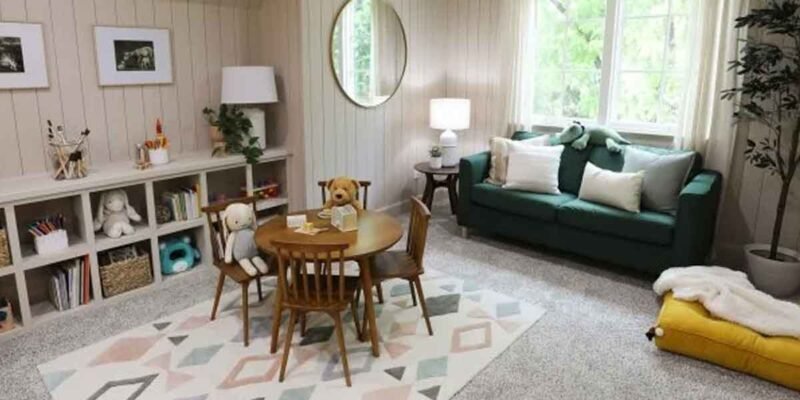
Life moves fast. One minute you’re setting up a nursery, and the next you’re wondering how to fit a home office into the guest room—or how to reclaim that space once the kids move out. Our needs change constantly, but our homes often stay the same. The traditional answer to this problem is usually a costly, dusty, stressful renovation. But tearing down walls isn’t the only way to adapt.
Clear the Canvas: Decluttering and Repurposing
Before you add anything new, you have to deal with what is already there. Life transitions are the perfect catalyst for a deep declutter. If you are turning a playroom into a study area, the toys have to go. If you are downsizing possessions after the kids leave, you need to sort through decades of memories.
Start by viewing your rooms as blank slates. Forget about what the room was “supposed” to be. A formal dining room that gets used twice a year might serve you better as a library or a play space. A large walk-in closet could become a compact nursery or a private Zoom booth.
Once you have cleared the clutter, look at your furniture with fresh eyes. Could that dresser work as a changing table? Can the sideboard in the hallway hold office supplies? Repurposing what you own saves money and forces you to get creative with your layout.
Master the Art of Smart Storage
As life changes, so does the “stuff” we accumulate. A growing family needs space for strollers and sports gear, while a new hobbyist might need room for crafting supplies. When you can’t add square footage, you must maximize the space you have.
Think vertical. Tall bookcases, wall-mounted shelving, and over-the-door organizers utilize the often-ignored space near the ceiling. Under-bed storage is another prime location for seasonal items or things you don’t need daily access to.
For high-traffic areas, consider investing in modular closet systems from stores available in Park City. These aren’t just for bedrooms; they can transform a chaotic pantry, a messy garage, or a disorganized mudroom into a model of efficiency. The beauty of these systems is their adjustability—shelves can move up or down as your storage needs shift from diapers to textbooks to gardening tools.
The Power of Lighting and Color
Never underestimate the psychological impact of light and paint. These two elements can completely alter the mood and perceived size of a room, helping you define a new purpose for the space.
If you are creating a home office in a dark corner, a fresh coat of bright, cool-toned paint can make it feel alert and productive. Conversely, if you are setting up a relaxation zone or a nursery, warmer tones and soft, dimmable lighting will help signal to your brain that it is time to wind down.
Lighting doesn’t require an electrician, either. Plug-in sconces, floor lamps, and LED strips can be added anywhere. Layering your lighting—mixing ambient, task, and accent lights—allows you to change the room’s function with the flip of a switch. A dining table can act as a bright workspace during the day and an intimate gathering spot at night simply by adjusting the lighting.
Invest in Multifunctional Furniture
In a flexible home, every piece of furniture should earn its keep—preferably by doing double duty. When you are adapting to life changes, static, heavy furniture can feel like an anchor. Instead, look for pieces that transform.
- Sofa beds: The classic solution for turning a living room into a guest room.
- Ottomans with storage: perfect for hiding toys, blankets, or files while providing extra seating.
- Drop-leaf tables: These can be tucked against a wall as a console and expanded when you have company.
- Nesting tables: These take up little space but can be spread out when entertaining.
By choosing furniture that adapts, you keep your floor plan open and fluid. This is essential when a room needs to serve conflicting purposes, like a living room that doubles as a yoga studio or a bedroom that houses a workspace.
Simple Accessibility Modifications
Preparing a home for life changes often involves thinking about mobility. Whether you are recovering from a surgery, welcoming an aging parent, or planning for your own future, accessibility makes a home safer and more comfortable for everyone.
Fortunately, making a home accessible doesn’t always require widening doorways or installing elevators. Small, non-structural changes make a massive difference:
- Lever-style door handles: These are much easier to operate than round knobs, especially if your hands are full or you have limited grip strength.
- Better task lighting: increasing visibility in kitchens and hallways reduces the risk of falls.
- Secure rugs: Use double-sided tape or non-slip pads to prevent tripping hazards.
- Grab bars: Modern grab bars come in stylish finishes that look like high-end towel racks, adding safety to bathrooms without the “hospital” aesthetic.
- Smart home tech: Voice-activated lights and thermostats can be a huge help for anyone with limited mobility.
Conclusion
Your home is not a museum; it is a living space that should support you through every stage of life. By focusing on adaptable layouts, smart organization, and versatile furnishings, you can navigate transitions smoothly without the expense and disruption of a major renovation.