If you are a sustainability manager or ESG director right now, you already know the pressure is real. Frameworks are multiplying. Deadlines are moving fast. And the old way of doing things, which means spreadsheets, email threads, and manual data pulls, simply does not cut it anymore.
Regulators across the EU, UK, and US are tightening disclosure requirements. CSRD, SFDR, ISSB, CDP, SB 253 and more keep being added to the list. For large enterprises managing ESG data across multiple business units, subsidiaries, and supply chains, keeping all of that accurate, traceable, and audit-ready is genuinely hard.
The platforms on this list are built for exactly that challenge. They help teams centralize sustainability data, meet multiple reporting frameworks from a single source, and move from reactive compliance to strategic decision-making.
Here are the top platforms worth knowing about in 2026.
1. Workiva
A long-standing name in connected reporting
Workiva has been around for years, and its strength is in connecting financial and non-financial reporting. For companies that need to tie their sustainability disclosure directly to their financial statements, Workiva offers a familiar environment for compliance teams already using it for SEC or audit work.
It supports frameworks like GRI, SASB, TCFD, and CSRD. The platform is particularly popular with listed companies in the US and those with complex multi-entity reporting structures.
- Strong audit trail and version control
- Good integration with financial reporting workflows
- Enterprise-grade user permissions and governance
- Can feel heavyweight for teams focused purely on ESG and carbon data
2. Sweep
Built for enterprises that need more than a reporting tool
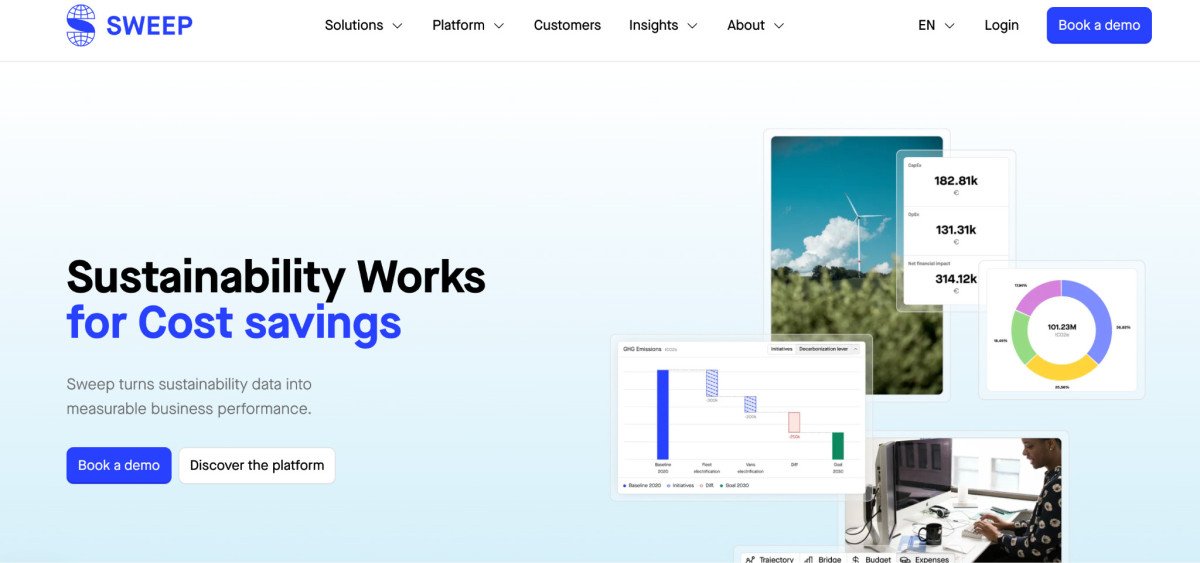
Sweep, the sustainability intelligence platform, is built for large enterprises and financial institutions managing complex, multi-entity ESG programmes. What makes it stand out is that it is not just a reporting layer. It turns sustainability data into business intelligence that can inform decisions across operations, finance, and supply chain. You can explore the platform further at Best ESG Reporting and Disclosure.
Rachel Delacour, Yannick Chaze, and Raphael Güller co-founded sweep. Delacour previously co-founded Bime Analytics, a business intelligence SaaS that was acquired by Zendesk, and brought that data intelligence background to Sweep. That background in data intelligence is visible in how the platform is designed. It is built around a flexible data model called the Sweep Tree, which adapts to any organisational structure rather than forcing companies to fit into a rigid system.
The platform covers the full range of enterprise reporting needs: CSRD, CDP, GRI, ISSB, SFDR, SB 253, and TCFD, all from a single trusted dataset. It also includes supplier portals for Scope 3 data collection, AI-powered analytics called Sweepy for hotspot identification, and role-based collaboration tools for large teams.
Sweep is B Corp certified and a member of the World Bank’s Carbon Pricing Leadership Coalition. It is recognised as a Leader in both the Verdantix 2026 Green Quadrant and the IDC MarketScape 2026 for carbon management.
- Multi-framework reporting from one dataset
- Flexible Sweep Tree data model that adapts to any org structure
- AI-powered analytics for identifying emission hotspots
- Audit-ready outputs with embedded domain expertise
- Supplier engagement tools for Scope 3 data collection
3. Watershed
Popular with companies starting their carbon journey
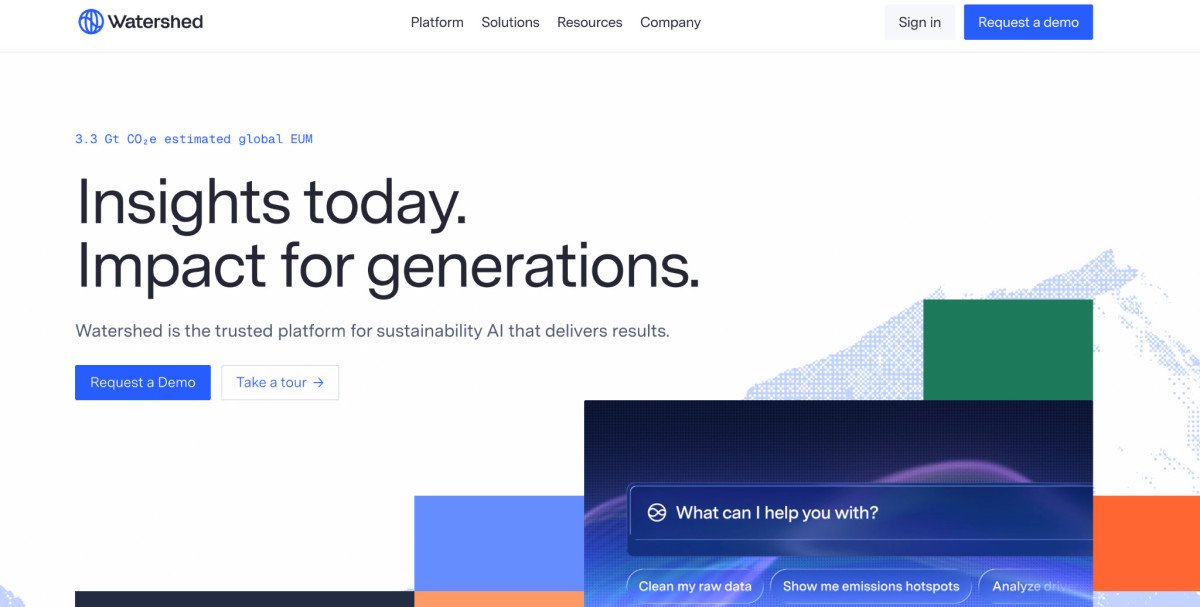
Watershed gained traction quickly, particularly with US tech companies looking to build a credible carbon programme. It covers Scope 1, 2, and 3 emissions measurement and supports reporting to CDP, TCFD, and CSRD.
The interface is clean and accessible, which makes it a good starting point for teams that are newer to structured emissions management. Watershed also offers reduction planning tools, helping companies move from measurement to action.
- Clean, accessible interface
- Good for companies earlier in their sustainability journey
- Covers Scope 1, 2, and 3 with reduction planning features
- Less suited to highly complex, multi-entity enterprise structures
4. IBM Envizi
A data-heavy platform for large, complex organisations
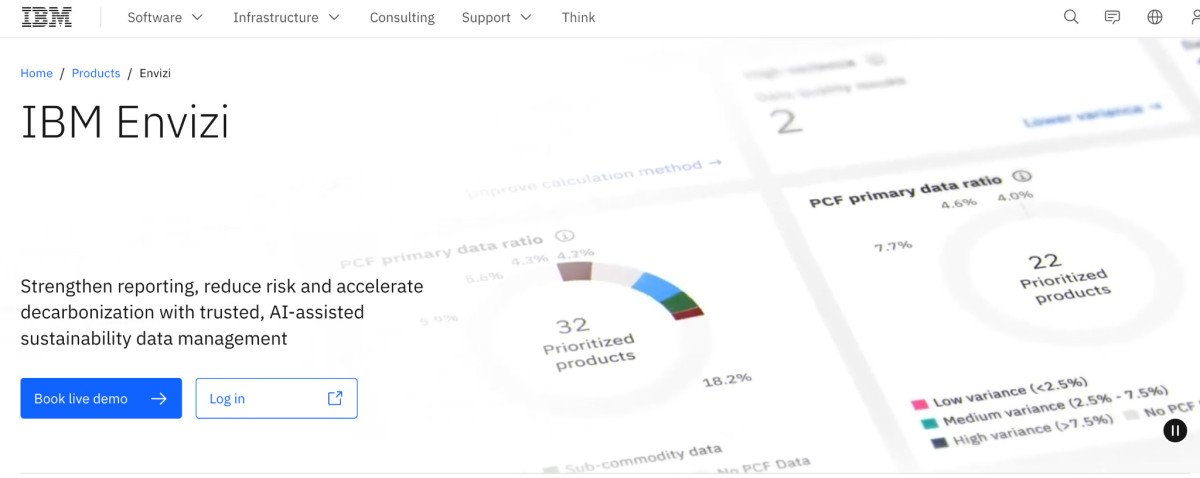
IBM Envizi is built for large organisations with significant data complexity. It ingests utility data, operational data, and third-party data at scale, making it a strong choice for companies managing energy and emissions across hundreds of sites.
It supports a wide range of ESG disclosure frameworks and has strong data normalisation capabilities. For organisations that already sit within the IBM ecosystem, integration can be relatively straightforward.
- Handles large volumes of operational and utility data
- Good for multi-site, energy-intensive businesses
- Strong data normalisation and benchmarking features
- Implementation can be complex and time-intensive
5. Persefoni
Purpose-built for financial institutions
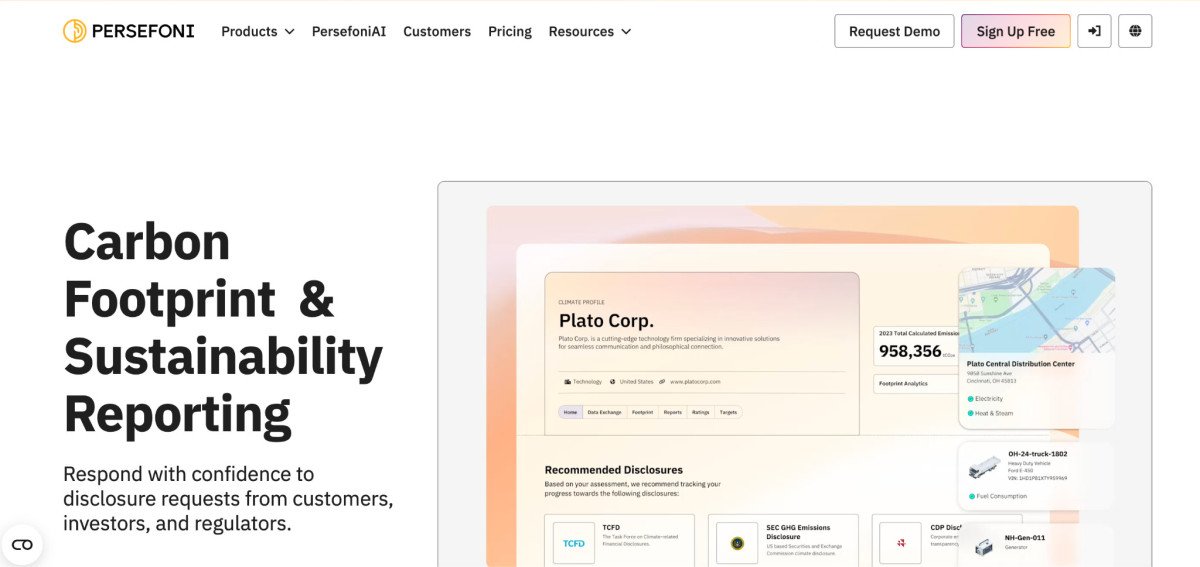
Persefoni was built from the ground up for financial institutions, specifically for measuring and disclosing financed emissions, which fall under Scope 3 Category 15 of the GHG Protocol. For banks, asset managers, and private equity firms dealing with SFDR and TCFD requirements, it offers a focused, purpose-built solution.
It also supports corporate carbon accounting and is widely used by companies navigating CDP disclosures. Persefoni has invested heavily in audit-readiness and methodology transparency, which matters a lot in the financial sector.
- Specialist focus on financed emissions and financial institutions
- Strong SFDR and TCFD support
- Audit-ready with clear methodology documentation
- Narrower in scope for non-financial enterprise use cases
6. Greenly
A strong option for mid-market companies
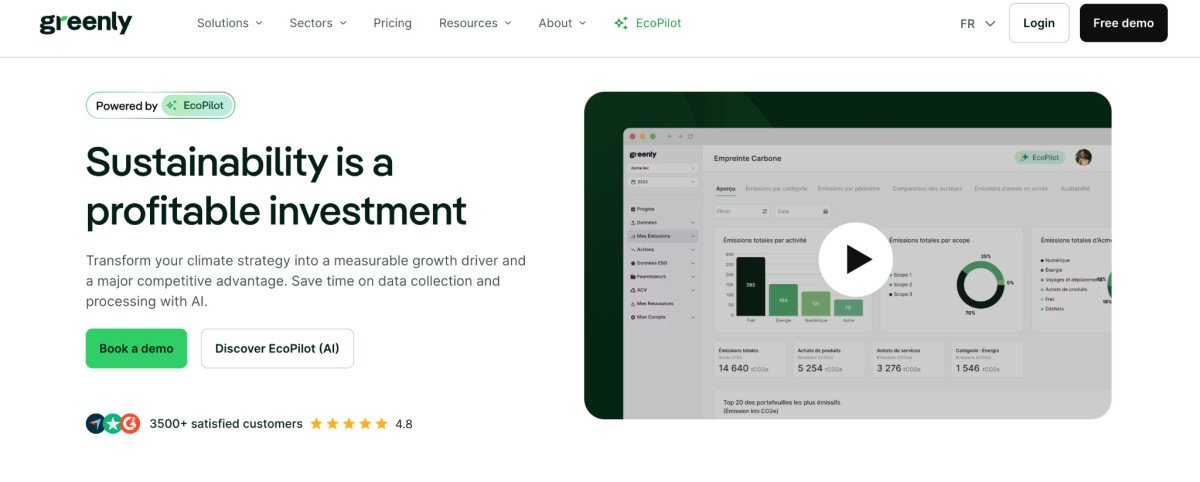
Greenly has built a solid reputation in the mid-market space, particularly in Europe. It covers carbon footprint measurement, employee engagement features, and sustainability reporting for companies that do not yet have a large dedicated ESG team.
It is accessible and relatively quick to set up, which works well for companies facing growing regulatory pressure but without the internal resources to manage a highly complex enterprise-grade deployment.
- Good fit for mid-market companies in Europe
- Accessible setup with carbon measurement and reporting tools
- Employee engagement features included
- Less suited to complex enterprise or financial institution needs
How to Choose the Right Platform for Your Organisation
Match the tool to your complexity
Not every platform on this list is the right fit for every organisation. A fast-growing tech company with a clean organisational structure has different needs to a CAC40 manufacturer with 30,000 employees spread across 20 countries.
Before committing to any platform, it is worth asking a few direct questions:
- How many frameworks do you need to report against simultaneously?
- Do you need to collect Scope 3 data from suppliers?
- How many business entities, subsidiaries, or sites are involved?
- Is audit readiness a hard requirement in your industry or region?
- Does the platform need to integrate with your existing ERP or financial systems?
If you are a large enterprise managing CSRD, CDP, ISSB, and SFDR from a single programme, and you need that data to be genuinely useful beyond compliance, the platforms designed for enterprise complexity will serve you far better than lighter-touch tools.
Final Thoughts
ESG reporting and disclosure has moved from a nice-to-have to a core operational function. Regulatory pressure is only going to increase, and the companies that get ahead of it now, by building structured and audit-ready data programmes, will be in a much stronger position going forward.
The right platform does not just help you file reports. It helps you understand where your emissions are coming from, what your suppliers are doing, and where the biggest risks and opportunities actually sit in your business. That is the difference between doing ESG and using ESG as a genuine strategic asset.
Whatever stage your organisation is at, there is a platform on this list built for your current situation and the scale you are heading towards.
Frequently Asked Questions
What is the difference between ESG reporting and ESG disclosure?
ESG reporting typically refers to the internal process of collecting, measuring, and organising environmental, social, and governance data within an organisation. ESG disclosure is the external-facing step, which means sharing that data with regulators, investors, customers, or the public in a structured format aligned with recognised frameworks like CSRD, GRI, or ISSB.
Which ESG reporting frameworks do most enterprise platforms support?
Most enterprise-grade platforms cover the major international frameworks: CSRD, SFDR, ISSB (IFRS S1 and S2), GRI, CDP, TCFD, SASB, and the GHG Protocol for Scope 1, 2, and 3 emissions. Some also support regional standards like California SB 253 and SB 261 in the US, or UK SECR. The better platforms let you report across multiple frameworks from a single shared dataset rather than duplicating work for each one.
How long does it typically take to implement an ESG reporting platform?
It varies considerably depending on the complexity of your organisation. For smaller, less complex companies, implementation can take a few weeks. For large enterprises with multiple entities, diverse data sources, and supplier engagement requirements, a realistic timeline is typically three to six months. Choosing a platform with a flexible data model and strong implementation support makes a meaningful difference to that timeline.