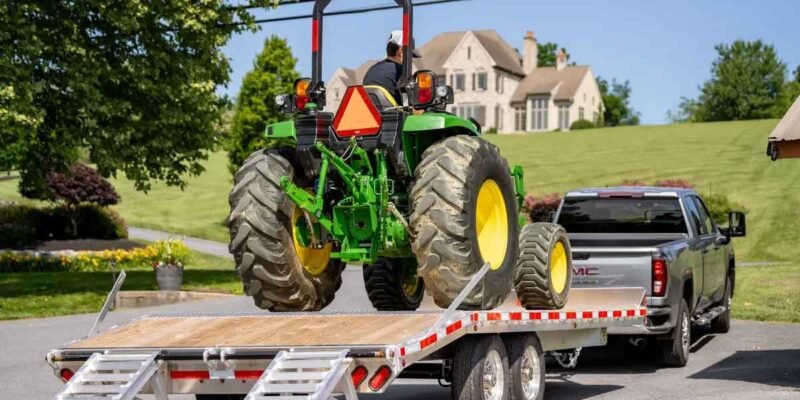
The transport of heavy earthmoving machinery presents some of the most complex logistical challenges on Australian roads today. Getting multi-tonne equipment from a depot to an active construction site safely is a process that starts long before the ignition is turned on. It begins with the fundamental engineering and design of the transport vehicle itself. Unloading and loading procedures are historically the most vulnerable phases of heavy haulage, making the physical design of the trailer a critical factor in mitigating workplace accidents and ensuring public safety across the entire road network.
The Physics of Safe Loading
Moving massive pieces of equipment like bulldozers, loaders, or excavators involves managing incredibly dense weight and awkward centres of gravity. When a machine tracks onto a trailer deck, the sudden shift in weight distribution can cause extreme instability if the transport vehicle is not appropriately designed for that specific load. Proper engineering takes these dramatic weight transfers into account to prevent potential disaster.
To combat these physical forces, transport engineers focus heavily on how weight settles across the axles. The primary goal is to keep the centre of gravity as low as possible while ensuring the payload remains perfectly balanced from front to back. Regulatory bodies take these physics very seriously. According to the official Load Restraint Guide published by the National Heavy Vehicle Regulator, it is a strict mandate that a heavy vehicle must be loaded in a way that load placement does not make the heavy vehicle unsafe or unstable. Ignoring these principles can lead to catastrophic rollover incidents during the loading phase or while navigating sharp bends on the highway.
Matching Trailer Profiles to Cargo Requirements
Because construction equipment varies wildly in shape, size, and weight, transport operators must evaluate and select specialised trailers tailored to their specific cargo. A one-size-fits-all approach is practically impossible in commercial haulage. Selecting the correct trailer profile is the first and most vital step in preventing loading accidents.
For example, when the primary concern is the frequent and safe roll-on and roll-off of tracked machinery, fleets will often turn to a custom rigid beavertail trailer designed specifically for heavy equipment. The sloped rear section of these trailers eliminates the dangerous and steep step-up that machines otherwise have to climb, drastically reducing the risk of a machine slipping or tipping backwards during embarkation. This smooth transition makes loading safer and much more efficient for the operator.
Similarly, when dealing with exceptionally tall cargo, fleets often rely on specific trailer profiles like a drop deck trailer to maintain compliance with strict overhead road height limits while keeping the load stable. By lowering the main deck between the axles, these trailers naturally lower the overall centre of gravity for top-heavy cargo, adding a vital layer of rollover protection that standard flatbeds simply cannot provide.
Key Design Features That Prevent Loading Accidents
Modern trailer design incorporates several clever engineering solutions that make the process of securing heavy machinery much safer for operators. The most effective transport setups share a few critical safety features built directly into their framework.
- Optimised Ramp Gradients: The angle of the loading ramp is crucial. If a ramp is too steep, heavy machinery struggles to maintain traction, especially in wet or muddy conditions. Hydraulic ramps that unfold to create a long, gentle incline allow tracked vehicles to drive onto the deck smoothly without the operator losing visibility of the deck ahead.
- Low Profile Decks: As mentioned with drop deck variations, keeping the deck close to the ground reduces the physical distance a machine must climb. This lower height minimises the severity of the pivot point as the machine transitions from the ramp to the flat deck.
- Strategic Load Restraint Points: Proper design means tie-down points are integrated directly into the chassis at reinforced intervals. This allows operators to apply direct, downward tension to the heavy machinery without compromising the structural integrity of the trailer itself.
- High-Traction Surface Materials: Bare steel becomes incredibly slick when exposed to rain or mud from a job site. Well-designed trailers feature mesh decking, checker plate steel, or specialised grip coatings on both the ramps and the main deck to ensure steel tracks and rubber tyres have adequate purchase during the loading process.
Investing in Long-Term Fleet Safety
By understanding the profound impact of trailer design, logistics companies and construction businesses can make better procurement decisions. Choosing appropriate commercial vehicles requires a thorough assessment of what will be hauled and the conditions under which the loading will occur. Investing in the correct transport equipment is not just about operational efficiency or legal compliance. It is about fundamentally designing the risk out of the loading process and protecting the operators tasked with moving Australia’s heaviest machinery.
Furthermore, just as data science is redefining risk assessment in lending and finance, intelligent equipment procurement is fundamentally redefining risk management on the road. Proactive investments in specialised vehicle design directly protect a company’s bottom line by preventing loading accidents and avoiding revenue loss from unexpected downtime, vehicle repairs, and costly liability claims.
When businesses prioritise safety in their trailer selection, they protect their assets, safeguard their workforce, and contribute to the overall safety of the transport industry.

