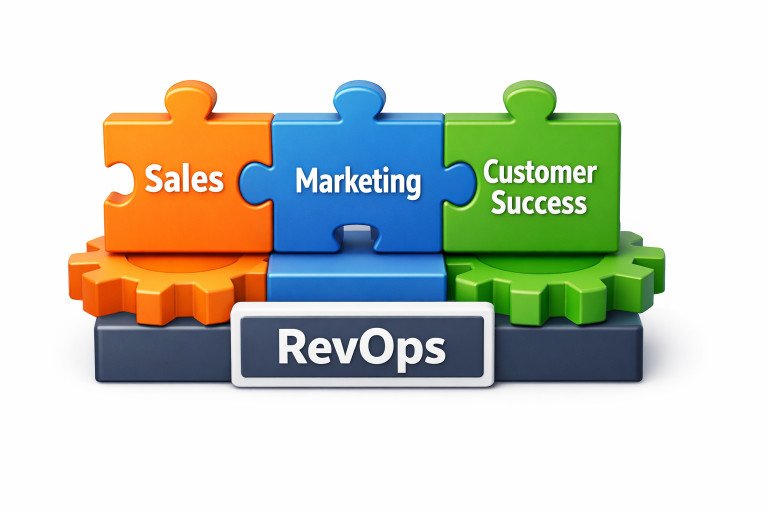
In today’s rapidly changing business environment, organizations need to continuously innovate to drive growth and remain competitive. One modern approach gaining significant traction is revenue operations, better known as RevOps. This practice brings together sales, marketing, and customer success into a unified strategy that optimizes revenue generation at every stage of the customer lifecycle. As markets become more complex and customer demands shift, understanding how RevOps will evolve is crucial for business leaders looking to position their companies for success.
RevOps unlocks growth by replacing traditional silos with a more integrated and data-driven framework. By aligning people, processes, technology, and metrics across teams, companies can streamline operations and maximize return on investment. As businesses adjust to disruptive forces in the market, the future of RevOps lies in technological advancements, a renewed focus on customer experience, and a clear strategy for sustained revenue growth.
This comprehensive guide explores the emerging trends shaping revenue operations and highlights the strategies that organizations can adopt for future-ready RevOps. Whether you are revamping your existing approach or embarking on your RevOps journey, understanding these future trends will help you build a scalable, agile, and high-performing revenue engine.
AI and Machine Learning Integration
Artificial Intelligence and Machine Learning are playing an increasingly transformative role in RevOps. These technologies are empowering businesses to automate repetitive tasks, such as lead scoring and follow-up scheduling, freeing up valuable human resources for higher-value, strategic activities. Through predictive analytics, AI and ML enable organizations to anticipate customer behaviors and market shifts, making revenue forecasting more accurate and reducing missed opportunities.
AI-powered tools can also analyze vast datasets to uncover hidden patterns in prospect and customer activity. This insight allows teams to refine their targeting and outreach, increasing sales efficiency and marketing ROI. As automation continues to advance in sophistication, leaders will need to prioritize data quality and governance to ensure ethical, effective AI deployment.
Enhanced Customer Experience Management
Revenue growth is increasingly tied to customer experience. RevOps teams are investing in technologies and processes that deliver seamless, personalized service at every interaction, from marketing engagement to post-sale support. Real-time feedback mechanisms, AI-powered chatbots, and virtual assistants all play pivotal roles in enhancing responsiveness and customer satisfaction.
Deploying centralized platforms for customer experience management helps unify data across different touchpoints. This integration enables teams to identify friction in the customer journey, rapidly resolve issues, and tailor offerings to evolving needs. Continual monitoring and improvement of these interactions creates loyal customers and drives recurring revenue.
Sales and Marketing Alignment
Historically, sales and marketing teams often worked independently, resulting in fragmented strategies and inconsistent customer journeys. The future of RevOps is defined by comprehensive alignment supported by integrated platforms and shared metrics. Unified technology stacks connect sales and marketing data, synchronize campaigns, and make it easier to measure impact and ROI across the entire funnel.
One strategy gaining momentum is account-based marketing (ABM), which targets high-value accounts with coordinated efforts from both sales and marketing. ABM leverages shared data to create personalized experiences and maximize engagement rates. As organizations adopt advanced analytics and collaboration tools, the divide between sales and marketing continues to shrink, leading to more streamlined and effective operations.
Focus on Customer Retention
Retaining existing customers is often more cost-effective and profitable than acquiring new ones. Modern RevOps strategies place significant emphasis on building customer loyalty through proactive retention programs, personalized outreach, and customer success initiatives. Predictive analytics enables teams to identify at-risk clients early and design tailored interventions to address their needs and drive continued value.
Loyalty programs, satisfaction surveys, and ongoing education create stronger relationships and enhance the lifetime value of each customer. By monitoring customer health scores and engagement data, organizations can intervene before churn risks materialize. According to companies with robust retention strategies see higher revenue stability and long-term growth potential.
Technology Integration and Platform Consolidation
The rapid pace of technological innovation has led many businesses to adopt a range of tools for every aspect of revenue generation. However, reliance on disparate systems can lead to data silos and operational inefficiencies. The future of RevOps is trending toward platform consolidation, where a single, integrated solution manages critical functions such as quote-to-cash, billing, forecasting, enablement, and reporting.
Integrated platforms offer substantial benefits, including reducing manual errors, improving data consistency, and accelerating time to value for new business initiatives. A consolidated approach also lays the foundation for scalable automation, better compliance, and more strategic decision-making. As more companies move toward a unified RevOps technology stack, those lagging behind risk falling out of step with competitors who are better equipped to innovate and adapt.
Implementation Strategies for Success
Transitioning to a modern RevOps model involves more than adopting new tools; it requires a cultural shift and a strategic approach. The most successful organizations begin by assessing their current revenue processes, identifying friction points, and prioritizing quick wins that demonstrate value to stakeholders. Cross-functional collaboration is essential. Breaking down silos requires regular communication, shared goals, and accessible data.
Training programs help teams develop the skills necessary to use new technologies and adapt to evolving processes. Continuous measurement and iteration based on defined metrics ensure that RevOps strategies remain aligned with business goals and market realities. Regularly seeking feedback from all stakeholders guarantees that improvements are sustained over time.
By embracing an integrated, customer-centric approach anchored by data-driven decision making, companies create the agility and resilience needed to thrive in tomorrow’s business landscape.