Rose attar stands as a symbol of natural luxury and cultural heritage, capturing hearts with its evocative aroma and centuries-old craft. Crafted entirely from nature, this exquisite perfume oil is not just a scent but a sensory journey into the world of natural Indian fragrance oils made with traditional attars. Its deep roots and lasting popularity reveal why rose attar continues to enchant people across generations. Unlike commercial fragrances, rose attar is free from synthetic chemicals and alcohol, making it ideal for those seeking a gentle, skin-friendly scent. Its creation relies on methods refined over a millennium, ensuring the purest extraction of rose essence and preserving the natural harmony of botanicals. From sacred rituals to personal adornment, the story of rose attar is woven through the fabric of human history.
Today, rose attar resonates with a new generation looking for authenticity in self-care. Revered for its lingering scent and artisanal production, rose attar is now celebrated not only for its perfume but for its sustainability and versatility in a range of personal and wellness uses. From festivals in the East to modern wellness studios in the West, the allure of rose attar demonstrates the enduring power of traditional perfumery. As contemporary consumers seek meaningful alternatives to mass-produced scents, this earth-friendly perfume oil finds a place in both daily routines and special occasions.
What Is Rose Attar?
Rose attar, sometimes called rose ittar, is a highly concentrated perfume oil derived exclusively from rose petals. It belongs to a category of oils known as attars or ittars, which distinguish themselves from conventional perfumes by being entirely alcohol-free and based on natural plant oils. Rose attar uses carrier oils like sandalwood or vetiver to intensify and preserve the fragrance, resulting in a scent experience often described as deep, intimate, and surprisingly long-lasting.
Historical Significance
Attar-making is a tradition rooted in ancient Persia and India, with evidence of rose distillation dating back beyond 1000 CE. Kannauj in northern India is especially famous, earning the title of the “perfume capital of India” for its artisanal mastery and unwavering commitment to pure scent. References to rose attar and its role in ceremonies, medicine, and personal grooming appear in the texts and folklore of both Middle Eastern and South Asian cultures. In classical times, rose oil and attar were considered luxury items, exchanged by royalty and coveted among the elite. Courts of Mughal emperors would use rose attar to scent the air, garments, and even fountains, marking it as a symbol of sophistication, spiritual purity, and prosperity. The continuity of these techniques and traditions is vital to the ongoing legacy of rose attar, contributing to its mystique in modern times.
Production Process
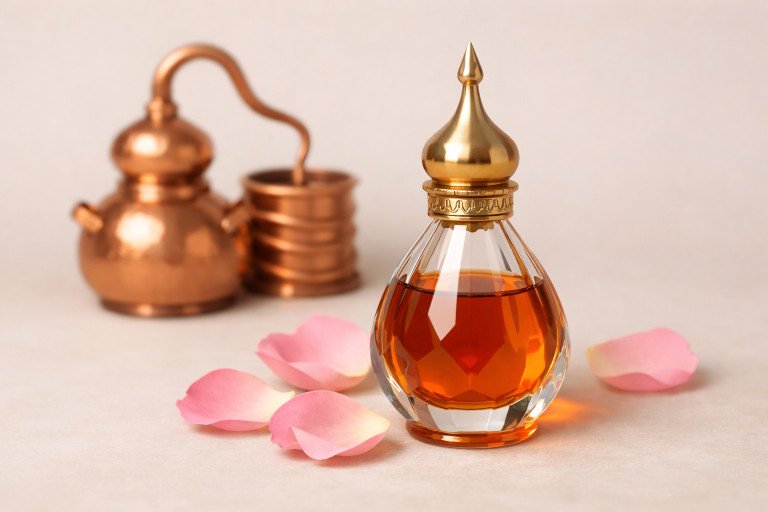
Producing rose attar is a labor-intensive craft involving a careful, multi-day steam distillation process. Artisans rise before dawn to hand-pick rose blossoms, as this is when the petals contain the highest concentration of natural oils. The petals are then sealed in large copper stills filled with water and slowly distilled at low heat. The steam carries the rose’s essential oil into a secondary vessel containing a base oil such as sandalwood. This process, repeated over several cycles, results in a richly fragrant, amber-hued oil. The traditional methods remain largely unchanged, safeguarding the complexity and purity of the finished attar.
Types of Rose Attar
- Rosa Damascena (Damask Rose): Prized for its opulent, velvety aroma with subtle hints of spice, Damask Rose is the standard in luxury perfumery. It lends depth and elegance to any blend.
- Rosa Centifolia (Cabbage Rose): Known for a lighter, sweeter, and more delicate fragrance, Cabbage Rose attar is ideal for those who prefer a gentler scent that evokes the charm of spring gardens.
The choice between these two types often depends on personal preference, cultural region, and the intended use of the attar.
Benefits of Using Rose Attar
Rose attar is renowned for much more than its captivating fragrance. Its use extends to aromatherapy, where it is believed to ease anxiety, uplift the mood, and induce a state of calm. Many users swear by its subtle aphrodisiac effect and its suitability for meditation and spiritual practices. As a natural, alcohol-free product, it benefits those with sensitive skin by providing a gentle alternative to synthetic perfumes. The antioxidants in rose attar can also support healthier skin, subtly enhancing one’s self-care ritual. These qualities make rose attar a highly prized addition to both personal fragrance collections and holistic wellness routines.
How to Choose Quality Rose Attar
Finding a genuine rose attar requires a discerning approach. The most important consideration is purity. Opt for attars free from artificial additives, lab-made scents, or excess carriers that dilute the aroma. Regions renowned for traditional production, such as Kannauj, are the safest places to purchase authentic attars. Packaging can also be telling: quality attar should be stored in airtight glass bottles to preserve its potency and protect against contamination. When testing attar, a single drop should emit a complex, layered aroma that evolves rather than a sharp, sudden scent often found in synthetic copies.
Modern Applications
Rose attar is undergoing a renaissance, cherished by those seeking sustainable and unique fragrance experiences. In modern contexts, attar finds a wide variety of uses. Beyond personal fragrance, it appears in artisanal skincare products, luxurious massage oils, and aromatherapy blends. Chefs are increasingly experimenting with natural attars to enhance desserts and beverages, particularly in regions where rose has been a culinary staple for centuries. There is growing interest in slow perfumery and clean beauty, reflecting a greater desire for ethical sourcing, minimal processing, and a reduced environmental footprint. Rose attar, with its artisanal methods and botanically rich composition, sits at the intersection of ancient wisdom and contemporary well-being.
Conclusion
The revival of rose attar signals a return to the artisan craftsmanship and purity that defined ancient perfumery. More than a fragrance, it is a testament to tradition, creativity, and a conscious approach to self-care. For anyone seeking a deeper connection to natural beauty, rose attar remains a timeless choice, evoking centuries of enchantment with every drop.