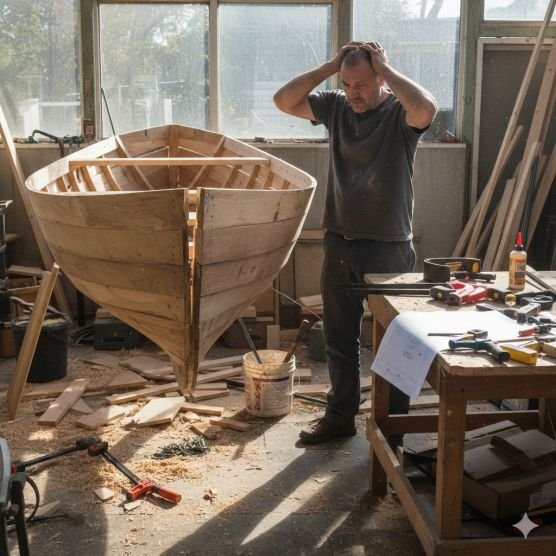
Spend enough time around serious anglers, and you quickly realise that building your own boat starts long before the first weld. It begins with planning decisions, workshop conversations, and trade-offs that shape how the hull performs once it meets real Australian conditions.
When you build a boat, early choices determine whether the result becomes a dependable Fishing Weapon or an ongoing compromise carried season after season.
Here is where custom builds most commonly fall short and how to avoid taking those mistakes onto the water.
- Choosing the Wrong Hull Design
Hull design defines ride quality, handling, and offshore capability. A hull profile that does not match the intended use cannot be corrected through upgrades later. Along the southern Australian coastline, offshore-focused builds require sufficient deadrise at the transom to soften impact and maintain control in short-period chop.
Variable deadrise designs that combine a sharp bow entry with strong stability toward the stern deliver the balance serious anglers expect when running wide. A deep-V hull engineered to slice through wave faces rather than pound across them sets the performance ceiling long before launch day.
- Never Compromise Structural Strength
Structural strength determines how a boat ages. Reducing framing, minimising cross-bracing, or selecting a lighter gauge plate to save cost introduces fatigue issues that only surface when pushing hard across the shelf in deteriorating conditions.
Full-length longitudinal framing tied together with triangulated cross-bracing is not an upgrade. It is the baseline requirement for dedicated offshore work. A properly engineered sub-floor system that uses full-depth frames braced in all directions withstands the repetitive stress of hard running far longer than a build that cuts corners to reduce weight or cost. Structural shortcuts rarely stay hidden once real conditions arrive.
- Plan Weight Distribution Early
Weight distribution shapes how a hull trims, planes, and behaves at rest long before the first sea trial. Poor placement of fuel tanks, batteries, or livewells creates handling problems that trim adjustments alone cannot resolve.
Whether drifting a reef edge or working a snapper ground in rolling swell, balance affects stability and crew confidence. A water ballast system that floods the keel chamber automatically at rest adds meaningful stability without permanent weight penalties, but only if the heavy components are correctly distributed from the start. Experienced builders plan this early because correcting the balance later is rarely straightforward.
- Design Around How You Fish
A custom build should reflect how you actually fish, not how the deck looks at delivery. Layout decisions that ignore real fishing workflow become obvious the moment lines hit the water.
Rod storage that cannot hold rigged outfits, poorly positioned bait stations, or limited movement when clearing a hard-running fish all reduce efficiency on the water. A fully welded and sealed checkerplate deck that drains and cleans in minutes gives serious anglers a functional working platform from the first session. A true Fishing Weapon supports instinctive movement, allowing a dedicated fisho to manage gear, reposition quickly, and stay focused when the bite turns hectic.
- Cheap Components Cost More
Rigging quality directly influences long-term reliability. Undersized wiring looms, non-marine-rated components, or shortcuts during installation create maintenance issues that surface well after launch day, often offshore when they are hardest to resolve.
Marine-grade fittings, tinned marine cable, and a properly installed bonding system that protects electronics from stray current corrosion should be treated as standard practice rather than optional upgrades. Owners feel the difference every season the boat stays dependable instead of demanding constant attention.
- Build Safety Beyond Minimum
Safety planning often receives less attention when budgets tighten, yet it becomes critical when conditions shift without warning. Navigation lighting that exceeds minimum requirements, adequate bilge capacity, and a sealed fuel system with proper venting and anti-siphon protection all influence offshore confidence.
A glass-out morning can turn into a hard southerly buster along the Australian coast faster than most expect. Boats built with a sealed fuel system and redundant safety measures are the ones that continue running reliably when conditions deteriorate and the stakes are highest.
- Plan for Easy Launch and Retrieve
A custom-built craft that is difficult to launch and retrieve adds stress to every trip before the fishing even starts. A boat that does not self-centre on the trailer consistently places lateral stress on the hull, trailer frame, and bunks across every ramp visit, compounding alignment issues that affect both trailer and hull performance over time.
A custom-designed trailer matched specifically to the hull and fitted with a self-centring launch and retrieve system eliminates this problem at the source. Single-handed launching becomes straightforward, ramp stress is removed from the equation entirely, and the boat aligns correctly on every retrieve regardless of how awkward the ramp conditions are on the day.
Closing Thoughts
A well-executed custom build gives serious anglers a platform shaped around how they fish and where they run. Avoiding common mistakes at the planning stage ensures hull design, structure, balance, layout, rigging, and safety all work together rather than competing against each other.
The difference between an average build and a trusted Fishing Weapon rarely comes down to one major decision. It is built through consistent choices that prioritise performance, durability, and practicality from the beginning. Out here on the Australian coast, where a calm run home can turn into a steep wind-driven chop without warning, the boats that earn long-term trust are the ones built properly from the start and continue delivering long after the excitement of launch day fades.