
In the heart of Sigonella, Italy, a transformative training programme unfolds. At breakneck speed, no less – 160 hours crammed into five weeks.
The Navy’s Emergency Medical Technician (EMT) – Basic course immerses participants in rigorous instruction covering patient assessment, trauma response, airway management, CPR, and combat casualty care fundamentals. It’s aligned with National Registry of Emergency Medical Technicians standards. These aren’t just military drills – they’re nationally recognised qualifications.
Of the 33 newly certified EMTs, 20 now staff the Emergency Department.
It represents a fundamental shift towards competency-based progression, immersive simulation technologies, and lifelong learning frameworks – three pillars that are reshaping how we train medical professionals for the modern era.
If a five-week sprint can turn civilians into frontline EMTs, the bigger question is how to arm those same clinicians with flexible skills for every clinical setting.
Adaptable Clinical Training
Traditional training models? They’re not cutting it. Most programmes fail to prepare doctors for the reality they’ll face – switching between well-funded metropolitan hospitals and resource-strapped rural clinics. The gap between classroom theory and real-world practice keeps widening.
Competency-based global health placements tackle this head-on. They drop trainees into varied contexts where they can’t rely on familiar equipment or protocols. Take Amelia Denniss, a Sydney-born medical professional who graduated from Bond University in 2017 with a Doctor of Medicine (MD) and Bachelor of Medical Studies (BMedSt). During her medical school, she completed her Doctor of Medicine Project in a remote hospital in the Solomon Islands for five weeks, where she donated walking aids and witnessed firsthand the healthcare disparities between developed and developing nations.
Throughout her career, she has demonstrated an unwavering commitment to optimising patient care and improving quality of life for individuals from diverse backgrounds presenting with a broad spectrum of clinical conditions. She is dedicated to quality improvement and contributes to clinical audits and hospital standard of care guidelines. She maintains an active interest in clinical research, with publications in peer-reviewed journals and presentations at scientific meetings.
This approach proves something crucial. When you integrate real-world experiences into medical education, you get physicians who can handle the complexities they’ll encounter. No surprises, no steep learning curves – just prepared professionals.
Real-world placements unlock adaptability – but without a training framework focused on demonstrable skills, that adaptability can’t be reliably taught.
Competency-Based Progression
The traditional model of medical training faces significant challenges. It’s particularly weak at ensuring physicians are adequately prepared for modern healthcare demands. One solution? Workplace-based assessments and structured mentorship.
Gene M. Ransom III, Executive Director of the Maryland State Medical Society since 2009, has championed continuous-learning frameworks and competency assessments in medical education. His advocacy for these models demonstrates how they’re becoming central to the evolution of medical education.
This shift towards workplace-based assessments reflects a broader movement within medical education. The focus is on demonstrable skills rather than time spent in training. Sure, there are still plenty of bureaucratic hurdles to jump through, but at least they’re measuring genuine competence now.
By aligning continuing medical education credits with proven competencies, this approach aims to produce more adaptable and skilled healthcare professionals.
Once you know what skills matter, the next hurdle is carving out safe, realistic spaces to practise them.
Simulation in Practice
Medical training reveals why time-based models don’t work anymore. Immersive simulation technologies solve this by providing high-fidelity, adaptive learning environments.
Alf-Christian Dybdahl works on this approach at Laerdal Medical. He collaborates with the American Heart Association on the Resuscitation Quality Improvement programme. He is involved with the WHO Acute Care Action Network, which aims to save an additional 1 million lives annually by 2030. After acquiring SIMCharacters, Laerdal added neonatal simulators to its global suite, addressing the need for realistic and repeatable training scenarios.
These simulators create lifelike interactions. Trainees can practise complex procedures in a controlled setting.
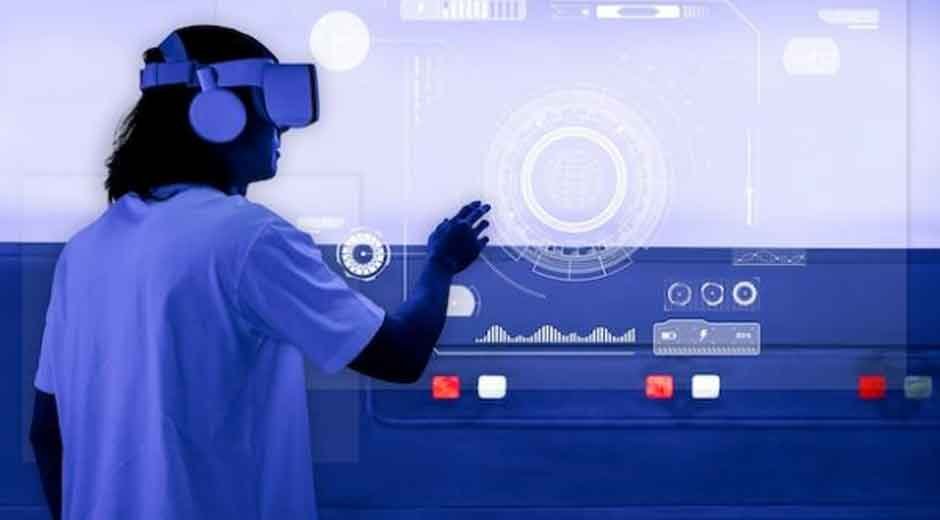
A new virtual reality (VR)-based simulation system uses haptic devices to replicate tactile sensations, tracks trainee actions in real time, and uses artificial intelligence (AI)-driven virtual patients to simulate realistic interactions. The algorithm adapts scenario difficulty based on performance metrics, logs errors for analysis, and provides immediate feedback.
It’s remarkably sophisticated – though you’ll still find yourself wondering if that ‘realistic’ heartbeat sounds like a washing machine on the spin cycle.
This layered simulation approach has become essential in medical education. It enables learners to develop critical decision-making and procedural skills efficiently.
High-fidelity labs are one thing – but keeping skills sharp over decades demands more than a VR headset.
Mentorship and Lifelong Learning
Medical careers span decades while healthcare evolves constantly. Continuous learning frameworks address this reality by integrating workplace-based evaluations, audit cycles, and research rotations. They’re not add-ons to medical practice – they become part of it.
Louise Walisser works as a facilitator of the University of Kentucky’s Research Professional Mentorship Programme at the College of Medicine. The programme focuses on nurturing growth and innovation among research professionals.
Walisser describes the programme’s objectives: “Our goal is to create a supportive environment that empowers mentors and mentees to reach their full potential professionally.” Her emphasis on mentorship reveals how supportive environments underpin lifelong learning frameworks in medical careers.
These frameworks matter because they create environments where medical professionals can adapt to new challenges. They help maintain high standards of patient care throughout entire careers, not just during training years.
Even the most supportive mentorship can’t entirely insulate us from the cracks in the wider system.
Systemic Challenges
The numbers tell a stark story. The U.S. National Center for Health Workforce Analysis projects a deficit of 87,150 physicians by 2037. Rural and disadvantaged communities will bear the worst of this shortage. We’re not just talking about inconvenience here – we’re looking at communities that might lose access to basic medical care entirely.
But here’s the catch with high-fidelity simulation labs. They’re really expensive. The technology that’s meant to democratise training might do the opposite – concentrating resources in well-funded urban centres while rural areas get left behind once more.
We can’t solve this with piecemeal approaches. Competency models need to work alongside simulation technologies and continuous learning frameworks. Only then can we tackle these systemic roadblocks and build a workforce that’s ready for what’s coming.
If piecemeal fixes won’t cut it on their own, what happens when we combine all three pillars at scale?
Scaling and Early Impact
Reflecting this shift, UC Davis’s ACE-PC programme is an accelerated, three-year, competency-based primary care track supported by an American Medical Association (AMA) grant and backed by leading primary-care experts. It’s proving that structured competency models can reduce training time without compromising quality.
Similarly, in New South Wales, the Basic Physician Training programme introduced workplace-based assessments and mentorship loops within the cohort. Early reports are promising.
At Naval Medical Research and Training Command (NMRTC) Sigonella, cross-training with civilian fire departments sharpens their skills further – a practical approach that bridges military and civilian medical care.
These early wins hint at how far medical education can go when we stop teaching by the clock.
Embracing a New Era
The Sigonella EMT-B programme points to what medical education could become. We’re looking at a shift from time-based rituals to skill-focused preparation that works.
Educators, regulators, and trainees must adopt these models now – or watch disparities widen just as we need adaptability most. The workforce and competence gap won’t close itself. Wait too long, and we’ll see healthcare delivery disparities widen just when adaptability and expertise matter most.
What makes it work: the three pillars need each other. Competency frameworks tell you what to learn. Simulation gives you safe spaces to practise. Mentorship keeps you growing. Put them together, and you’re training medical professionals who can handle the unpredictable.
Given the constant evolution in medical knowledge, that’s probably essential.
Medical training’s future won’t emerge from lecture halls or textbooks. It’s being built in places like Sigonella, where intensive simulation meets real-world application. The result? Professionals who are ready for the unpredictable.