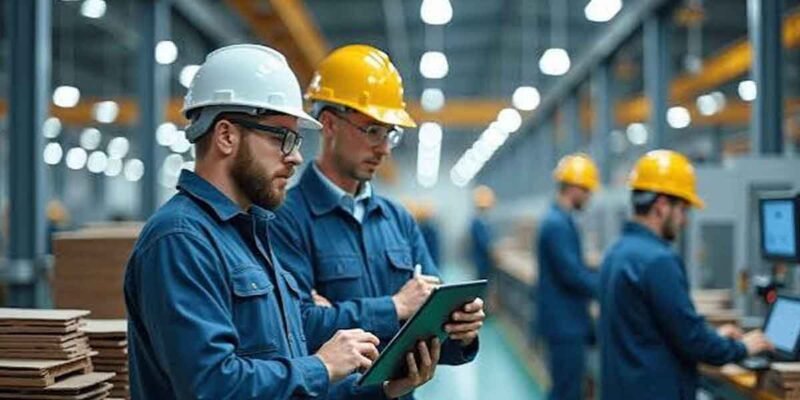
If you are looking for career opportunities in production industries, manufacturing jobs place you in environments that support product development. In these roles, your work directly contributes to production systems that move materials through different manufacturing stages and help create products. Here are some of the different roles of skilled workers in manufacturing jobs:
Maintain Work Areas
Keeping production floors organized and clean supports smooth and safe shifts in manufacturing jobs. A tidy space reduces hazards and speeds up tasks by giving each item a proper place. Handling materials according to workplace procedures protects both products and people; it keeps the site moving efficiently.
Following workplace safety procedures guides every action you take as a manufacturer. Safe habits protect you and your coworkers. This reduces workplace disruptions caused by accidents and allows production tasks to continue without unnecessary delays.
Assemble Products
Product assembly turns separate parts into a complete product. Workers build items to match exact production specifications, and accuracy during this process shapes the final quality. Positioning each component correctly sets up the next step in the line, creating a complete, high-quality product. The following points outline what assembly work entails on a day-to-day basis.
- Build to specifications: Match each product against the documented requirements before proceeding.
- Join materials: Bond or fasten parts during manufacturing processes using the right method.
- Position components: Place each piece in its correct spot for the upcoming assembly task.
Monitor Production
Monitoring the work process helps you understand exactly how well each step works. Recording all activities during your shift will provide useful information about events. This information can be used to monitor the production process and see whether you are sticking to your plans, as well as to help you prepare for job changes.
Operate Equipment
Once you start a production cycle, the equipment turns raw input into finished output and requires a skilled operator. Operators read the schedules first, then power up the machines at the right moment during the process. Stopping equipment according to operating procedures helps prevent product damage and allows the next production step to begin without interruption.
Machine monitoring becomes a valuable part of the production cycle. In this role, you monitor gauges, listen for changes, and take action before small changes become big problems. The initial few shifts are familiar with the signs of normal operation. Be aware of that so you can take quick action when there is a change.
Adjusting controls during the production process maintains output within the target range. The operator adjusts the speed and pressure to suit the product in hand. Adhering to set operating procedures will keep the equipment and surrounding personnel safe. In your role, consistent habits lead to consistent outcomes in every cycle.
Start Your Career in Manufacturing Jobs
Working in manufacturing provides clear-cut assignments, regular schedules, and genuine opportunities to develop skills. Your job may include handling equipment and tidying up work areas throughout the shift. Visit a manufacturing employer today to explore manufacturing jobs that match your experience and future career path.