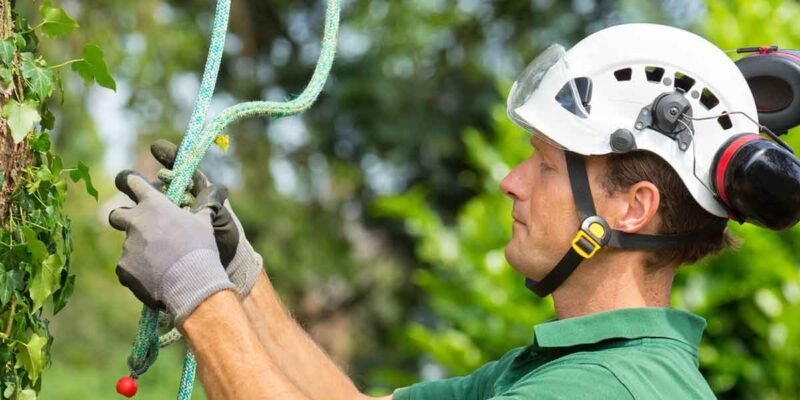
Arborists provide primary care for woody vegetation by diagnosing specific environmental stressors, such as pests or diseases. They cover the full lifecycle of your landscape, including growth management. Here is how to choose the right arborist for your needs:
Analyze Treatment Plans
Treatment plans detail the specific actions taken by arborists to address issues in plants. Comparing treatment plans can help you identify experts who focus on long-term plant health rather than short-term fixes. A good plan should list the chemicals and tools used at your site to ensure transparency. Professionals use deep fertilization to add nutrients to the ground, and growth regulators to slow down fast-growing plants.
Assess Preventative Programs
A professional will suggest ways to prevent issues before they appear and cause damage. While a basic cutter may wait for a limb to die, an arborist uses bark washes to prevent decay. Comparing preventive programs helps you see which professional uses scientifically timed methods to fight pests and diseases.
Since threats like fungi and termites are seasonal, a skilled tree doctor schedules systemic injections or dormant oil treatments accordingly. They also provide fungicides to protect leaves or mite control to stop early thinning. A proactive strategy prevents rot from spreading and the need for frequent emergency interventions.
Investigate Application Techniques
By investigating application techniques, you can identify an arborist who uses advanced delivery methods to promote treatment success. An expert utilizes direct trunk applications for quick results, rather than spraying the ground. Since pests may hide in small cracks, dormant oil sprays can help coat branches during the winter months to keep them out.
Teams administer mite control through targeted foliar applications, or they use growth regulators to manage tree development. To address soil issues, tree maintenance specialists may apply vertical mulching to create air pockets. Since surface-level watering fails to reach the root zone, an arborist who uses specialized injections provides a higher level of service.
Inquire Diagnostic Methods
Many tree disease symptoms look familiar; professionals use technical tools to find the cause of a plant’s decline. Experts perform site-specific evaluations to identify hidden stressors and analyze soil chemistry to address nutrient gaps. While a basic laborer might treat only leaves, a professional investigates the root system. They use their findings to create a plan that promotes long-term safety and health. By asking about their specific processes, you can verify that the arborist follows these investigative standards:
- Checking branch attachment strength
- Monitoring seasonal growth patterns
- Probing compacted earth density
- Measuring annual twig elongation
Evaluate Ongoing Maintenance
Evaluating site-specific maintenance plans shows whether a provider is committed to your landscape’s long-term health. An arborist may offer a multi-year strategy that adapts to changing environmental conditions. Professionals schedule dormant oil applications to neutralize pests before they hatch in the spring. Systemic injections promote long-term immunity and disease suppression helps prevent outbreaks.
Learn More About Arborists
Reviewing a service provider’s equipment inventory helps you judge their ability to handle jobs safely. Professionals maintain modern bucket trucks and specialized cranes to ensure precision during large-scale removals. Contact a reputable arborist to learn more about their services.