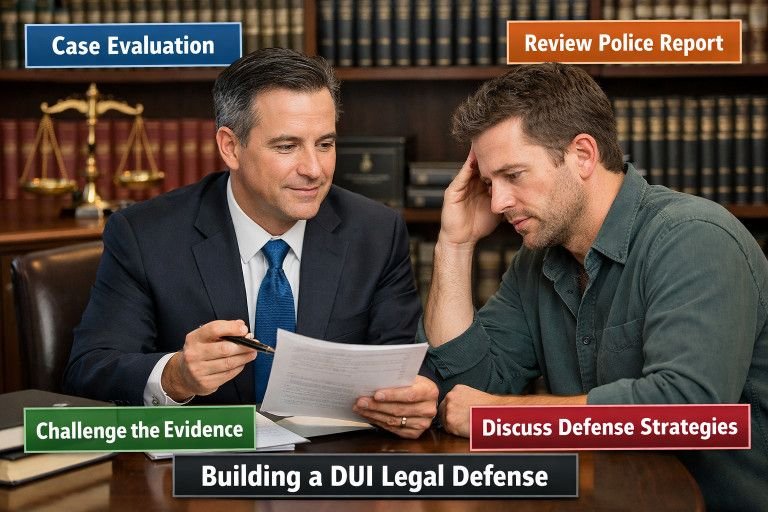
When confronted with a DUI charge, individuals may feel overwhelmed by the potential consequences. However, an awareness of available legal strategies is crucial for anyone facing these allegations. Exploring every legal avenue, including hiring a DUI attorney in Phoenix, can significantly impact the outcome of a case. DUI legal defense encompasses a range of approaches that focus on the specifics of the stop, the evidence collection, and the accused’s physical state.
From disputing the justification for a traffic stop to presenting medical evidence that calls the reliability of chemical testing into question, a variety of defenses are available. A thoughtful defense may result in charges being reduced or even dismissed entirely. Understanding these options enables individuals to make informed decisions at every stage.
Preparation starts the moment a DUI charge is filed, as the early stages often shape the entire process. Success depends on a detailed review of the facts and a willingness to challenge assumptions, procedures, and technical results.
Challenging the Traffic Stop
Law enforcement officers must demonstrate “reasonable suspicion” before making a DUI stop. Courts require objective evidence, which might include witnessing erratic driving or a clear traffic violation. If an officer cannot justify the reason for pulling someone over, any evidence, including results of sobriety or breath tests, may be rendered inadmissible in court. When an arrest is based on a stop made without cause, it is possible for an entire DUI case to collapse, as many state courts have affirmed.
Questioning Field Sobriety Tests
Field sobriety tests are widely used to support DUI arrests, but their accuracy is frequently disputed. These tasks are susceptible to outside influences: poor weather, darkness, or uneven pavement can all impact performance regardless of sobriety. Furthermore, certain individuals, such as those with medical conditions affecting balance or coordination, may perform poorly regardless of intoxication. Courts are increasingly open to arguments that field sobriety test results may not reliably indicate impairment, especially when circumstances compromise their fairness.
Disputing Breathalyzer Results
are fundamental to most DUI prosecutions, but their reliability is not absolute. These devices must be calibrated regularly and administered by trained personnel. Equipment malfunctions, improper use, lack of timely maintenance, or even the presence of certain substances in the mouth can distort readings. Items like mouthwash, breath fresheners, or some medicines can temporarily spike a person’s blood alcohol content. Thoroughly reviewing device maintenance logs and the testing protocol offers numerous avenues to dispute the reliability of breathalyzer results in court.
Rising Blood Alcohol Content Defense
The time it takes for alcohol to be absorbed means that a person’s BAC continues to climb after drinking has stopped. The “rising blood alcohol” defense contends that at the moment of driving, the BAC was within legal limits but increased before chemical testing was administered. This argument can be especially powerful when there is a significant gap between the traffic stop and the administration of a breath or blood test, and it is supported by scientific studies on ethanol absorption rates.
Medical Conditions and Dietary Factors
Medical conditions and some diets can influence DUI evidence. Diabetics experiencing ketoacidosis may have elevated acetone levels, which breathalyzers can misinterpret as alcohol. Similarly, those following a low-carbohydrate or ketogenic diet may develop higher acetone concentrations, which can falsely register as blood alcohol content. Evidence of these conditions can introduce enough reasonable doubt to challenge the prosecution’s case. Presenting medical documentation or obtaining expert witness testimony often strengthens this defense strategy.
Necessity and Involuntary Intoxication
Under unique circumstances, necessity or involuntary intoxication may provide a complete defense to DUI charges. If a person drives to avoid imminent harm (such as transporting someone to the hospital in an emergency), they might assert necessity. Alternatively, a person who unknowingly ingests alcohol or another intoxicant, perhaps through spiked beverages, can argue involuntary intoxication. These approaches require clear and convincing evidence but can be argued by an attorney in exceptional situations.
Lack of Proof of Driving
The central element of any DUI case is the act of driving. In situations where law enforcement did not witness the accused operating a vehicle, and surveillance or witness testimony is lacking, the defense can assert a lack of proof. Courts have dismissed cases where the prosecution cannot establish beyond a reasonable doubt that the defendant was behind the wheel at the time of the offense.
Conclusion
Every DUI case is unique, shaped by the facts and the defense’s willingness to challenge evidence at every turn. Knowing which legal defenses are available and understanding their applications is vital to forming a successful strategy. Anyone charged with a DUI should seek advice from a legal professional equipped to provide guidance that protects their interests in court.