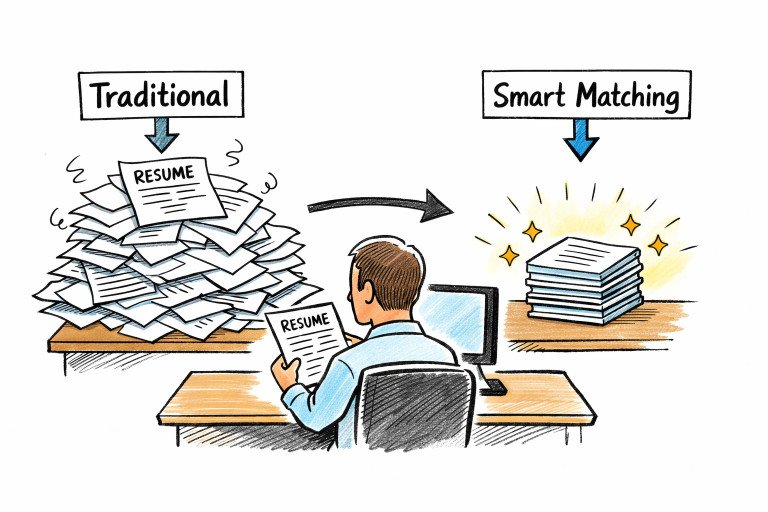
In today’s rapidly evolving employment landscape, organizations are challenged to identify exceptional talent with precision and speed. Traditional recruitment methods can often result in slow hiring, missed opportunities, and mismatched placements. Driven by the need for efficiency and accuracy, many recruiters have turned to technological solutions. One area seeing remarkable advancements is smart candidate matching, which aims to transform how employers connect with qualified individuals while enhancing critical processes such as candidate fraud detection.
Smart candidate matching does not simply automate resume screening. It integrates artificial intelligence (AI) and machine learning to surface candidates whose qualifications, personality, and values closely align with a job’s needs. This holistic approach can help ensure not only technical but also cultural fit, ultimately reducing turnover and strengthening teams.
The Evolution of Recruitment Practices
The world of recruiting has progressed from manual resume reviews and phone screenings to digital-first search and selection models. Just a decade ago, HR departments juggled vast numbers of paper applications, relying on human intuition as much as skill data. Today, most organizations use applicant tracking systems and AI-based assessment tools that automate early screening and provide a more organized view of potential hires. This continuous evolution has led to more structured, scalable suitable for remote and global talent pools.
Modern hiring now embraces data at every stage, from sourcing and skill assessment to onboarding and retention checks. By leveraging automation and complex algorithms, companies can sort large quantities of candidate information more efficiently and consistently than ever before. This not only streamlines recruitment but also helps to minimize bias and ensure that every applicant receives a fair evaluation.
Understanding Smart Candidate Matching
Smart candidate matching platforms analyze multiple data points from candidates and job descriptions. These systems move beyond simple keyword filtering, weighing factors such as skills, education, career trajectory, prior performance, soft skills, and relevant work achievements. By drawing from this multi-dimensional talent profile, AI-driven technology presents a list of best-fit candidates for each position, considerably improving the odds of making the right hire.
Additionally, candidate-matching algorithms often use historical hiring trends and feedback from previous recruitment cycles to refine their recommendations. Over time, these tools become more adept at spotting patterns that human recruiters may miss, resulting in higher quality-of-hire scores and fewer mismatches. For more in-depth reading on AI integration in hiring beyond matching, consult articles from reputable sources such as Harvard Business Review.
Benefits of Implementing Smart Matching Technology
Integrating smart candidate matching solutions into recruitment operations delivers significant value:
- Reduced Time-to-Hire: Leveraging automation for screening and ranking accelerates the recruiting cycle by rapidly surfacing the most qualified applicants.
- Higher-Quality Hires: Inclusive data analysis enables employers to identify candidates who are not only technically proficient but also culturally aligned and motivated by shared values.
- Lower Costs: By decreasing hiring cycle times and minimizing the risk of poor placements, organizations can save money typically spent on repeated recruitment and lengthy onboarding.
- Improved Team Cohesion: Candidates with a closer cultural fit tend to integrate more quickly and remain engaged, which supports higher retention rates and greater employee satisfaction.
Real-World Applications and Success Stories
Many global employers have successfully adopted smart-matching technology into their hiring workflows. For example, Indeed’s Smart Sourcing tool uses AI to access a talent pool of nearly 300 million profiles and resumes, enabling recruiters to find individuals who meet their specific criteria quickly. This results in faster, more targeted shortlist creation and reduces the administrative burden on hiring teams.
Major tech companies and fast-growing startups report significant improvements to both hiring speed and hire quality following automation. As reported by Forbes, AI-powered solutions can deliver enhanced engagement, better predictive analytics, and strong ROI to organizations willing to invest in the right technology stack.
Challenges and Considerations
Despite the many advantages, implementing smart candidate matching comes with hurdles. Organizations need to maintain candidate privacy and adhere to strict data security protocols. AI systems can also reinforce existing biases if their training data or evaluation criteria are poorly designed or poorly managed. Accordingly, regular audits and human oversight are necessary to curb possible bias and ensure fairness.
Furthermore, relying solely on technology may risk removing vital human judgment from the hiring process. While algorithms excel at processing data and streamlining workflows, the final hiring decisions should consider the uniquely human factors that software cannot replicate.
Future Trends in Candidate Matching
Looking ahead, candidate-matching technologies are expected to become even more sophisticated. Predictive analytics will soon allow recruitment teams to forecast a candidate’s future performance and retention likelihood with greater accuracy. Innovations such as gamified skills assessment and video interview AI engines are also gaining traction, providing more dynamic ways to evaluate capabilities and culture fit in real time. Remaining alert to new developments in this field will be critical for any organization with aggressive hiring goals.
Conclusion
Smart candidate matching is dramatically changing the way businesses discover and select talent. By combining advanced technology with thoughtful implementation, organizations can optimize hiring processes while maintaining the essential human element in recruitment. As more companies embrace these tools, the future of hiring will continue to be shaped by the power of data-driven decision-making and evolving artificial intelligence.