Table of Contents
- Understanding SEER Ratings
- ENERGY STAR Certification
- Proper Sizing and Installation
- Advanced Features to Consider
- Importance of Regular Maintenance
- Enhancing Efficiency with Insulation
- Utilizing Smart Thermostats
- Considering Eco-Friendly Refrigerants
When the height of summer’s heat approaches, finding the right air conditioner is about more than just comfort. An energy-efficient air conditioner can save you money and minimize your environmental impact. Making this smart decision starts with solid information and advice you can rely on. As you compare options, consider the importance of reputable licensed air conditioning installers in Windsor to ensure you get the most from your investment.
Choosing the correct air conditioner requires more than picking the first model you find. It is a process that balances upfront costs, long-term energy savings, and the specific needs of your living space. Getting these factors right can keep your home cool, your bills low, and your environmental footprint small.
Informed choices make a difference in how efficiently your system runs and how much you spend over time. With energy prices on the rise and growing awareness of sustainability, focusing on certified efficiency, installation quality, and advanced features is more crucial than ever.
Having a professional assess your space and offer personalized recommendations can optimize your comfort and savings. Paying attention to regular maintenance and staying up to date with the latest technology will help you keep your system working effectively for years to come.
Understanding SEER Ratings
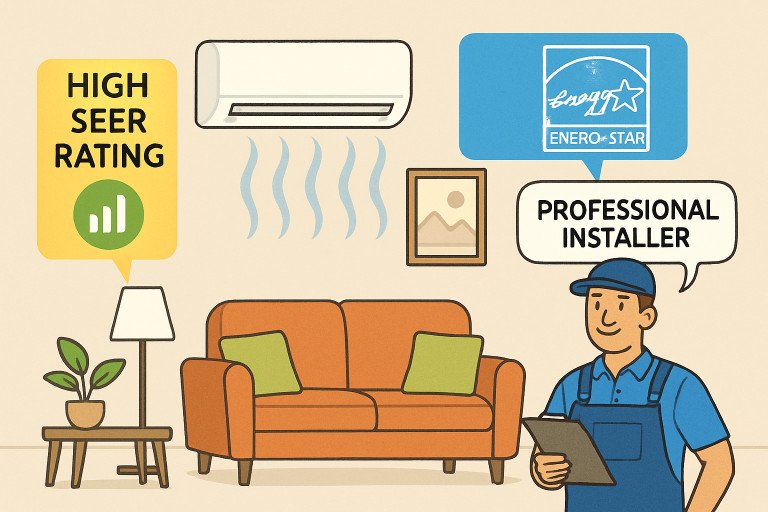
The Seasonal Energy Efficiency Ratio (SEER) is one of the most important metrics in evaluating an air conditioner. This value measures how much cooling a system provides for each unit of energy consumed over the season. The higher the SEER rating, the more energy-efficient the unit. Upgrading to a higher SEER, such as moving from SEER 10 to SEER 16, can significantly reduce your energy use and costs. The U.S. Department of Energy sets minimum SEER standards, but seeking models with a higher rating is a reliable way to increase your home’s efficiency. For more information, you can review guidance from
ENERGY STAR Certification
One of the most dependable shortcuts to finding an efficient air conditioning system is to look for the ENERGY STAR label. This certification, administered by the U.S. Environmental Protection Agency, is awarded to products that meet strict energy performance criteria. ENERGY STAR-certified air conditioners use at least 10 percent less energy than standard new models. Choosing these units not only means lower operating costs but also contributes to environmental protection by reducing greenhouse gas emissions.
Proper Sizing and Installation
An appropriately sized air conditioner is fundamental to efficiency and comfort. Oversized systems cool quickly but cycle on and off frequently, which wastes energy and leads to uneven temperatures. Undersized units run more often and still may not effectively cool your home. To determine the right system size, a licensed professional should perform a detailed load calculation, accounting for room size, insulation, the number and type of windows, and the amount of sunlight the room receives. This level of precision ensures optimal cooling while minimizing unnecessary energy use.
Advanced Features to Consider
Modern air conditioners employ advanced technology to maximize comfort and minimize waste. Variable-speed compressors are an innovation that adjusts the system’s cooling output based on current demand. Rather than always running at full power, these compressors ramp up or down, greatly improving energy efficiency. Additionally, systems equipped with sophisticated humidity control keep your indoor air more comfortable and can help prevent mold and mildew growth.
Importance of Regular Maintenance
Routine maintenance plays a critical role in your air conditioner’s efficiency and longevity. Dirty filters, clogged coils, and improper refrigerant levels diminish performance and strain the system, leading to higher energy bills and potential breakdowns. Simple maintenance tasks, such as changing filters every 1 to 3 months and cleaning coils, help prevent these issues. Scheduling annual professional checkups ensures your air conditioner runs efficiently and quickly identifies problems before they escalate. Detailed maintenance tips are available through resources like Consumer Reports.
Enhancing Efficiency with Insulation
A well-insulated home supports air conditioning efficiency by reducing the heat that enters or escapes your living space. Sealing gaps around doors and windows, upgrading to double-glazed windows, or adding insulation in attics and walls will keep cool air inside for longer periods. This translates to less work for your air conditioner and lower energy bills over time.
Utilizing Smart Thermostats
Smart thermostats have rapidly become a must-have for homeowners focused on efficiency and convenience. These devices allow precise, programmable control over your indoor climate, adapting cooling schedules to match your household routine. Most smart thermostats provide remote access via smartphone apps, making it easy to turn down the air conditioning while you are away and have it running just in time for your arrival. Over the long term, this technology leads to substantial savings and reduced energy use.
Considering Eco-Friendly Refrigerants
Air conditioner refrigerants are an important factor in environmental sustainability. Older refrigerants like R-22 are being phased out due to their ozone-depleting properties. Newer, more eco-friendly alternatives such as R-410A and R-32 are recommended for their much lower climate and ozone-depleting potential. When shopping for a new air conditioner, prioritize models with these refrigerants to align your purchase with global environmental standards.
Making the right choice in an energy-efficient air conditioner involves balancing technological innovation, careful installation, regular maintenance, and environmentally responsible refrigerant use. Each decision you make helps you maintain a cool home, save on utility bills, and support the health of the environment for years to come.