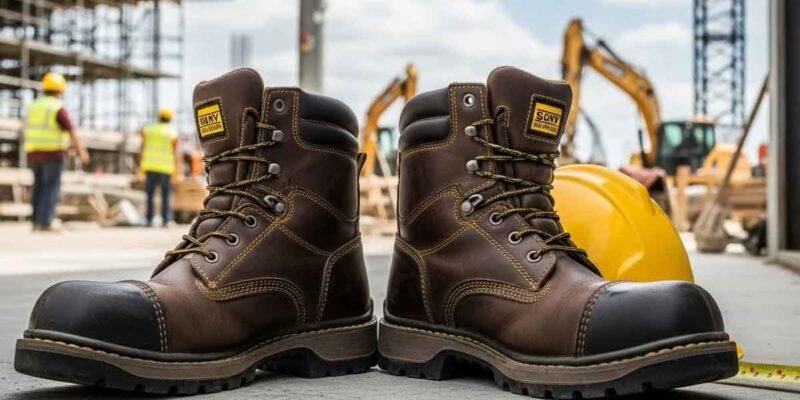
Choosing the right safety boots isn’t something most workers think about until they’ve worn the wrong pair.
Across Australian worksites, from commercial builds in Melbourne to regional civil projects in NSW, conditions are rarely predictable. Surfaces shift from compacted dirt to wet concrete. Weather moves from dry heat to sudden rain. Add long shifts on your feet and it becomes clear: footwear isn’t just PPE, it’s daily infrastructure.
The first step in selecting appropriate men’s safety footwear is understanding the environment you’re working in. Compliance with Australian Standards (AS/NZS 2210.3) is non-negotiable, but compliance alone doesn’t guarantee suitability.
Start with hazard exposure.
If you’re working around heavy materials, scaffolding or active machinery, impact protection is essential. Steel toe caps remain common in heavy-duty environments, offering maximum crush resistance. Composite toe options are lighter and better suited to roles involving electrical risk or frequent movement through security-controlled sites.
Next, consider underfoot conditions.
Slip resistance is critical in warehouses, workshops and commercial kitchens where oil, water or dust build-up is common. Look for outsoles rated for high slip performance and designed to maintain tread depth under sustained wear. A sole that performs well in the first month but deteriorates quickly becomes a risk factor by month three.
For construction and civil crews, penetration-resistant midsoles add another layer of protection. Sharp debris, exposed fixings and uneven terrain are routine hazards. A puncture-resistant layer prevents what can otherwise be a preventable injury.
Climate also plays a significant role on Australian sites.
In hotter regions, breathable linings and moisture control are important for reducing sweat build-up and skin irritation. Prolonged moisture inside a boot doesn’t just cause discomfort; it contributes to blistering and fatigue. In wetter conditions, water-resistant or waterproof materials help maintain internal dryness without compromising durability.
Comfort should never be dismissed as a secondary feature. Workers spending ten or more hours on hard surfaces experience cumulative strain through the feet, knees and lower back. Quality midsole cushioning and proper arch support reduce that strain over time. When fatigue sets in, concentration drops and that’s when incidents occur.
Fit is another overlooked factor. Boots should allow slight toe movement while keeping the heel secure. A loose heel leads to instability; a cramped toe box creates pressure points. Ideally, footwear should be fitted at the end of the day when feet are slightly swollen, providing a more realistic measure of working conditions.
Durability also affects operational efficiency. Inferior boots may appear cost-effective upfront, but frequent replacement disrupts uniform standards and increases overall spend. From a management perspective, consistent, reliable footwear across crews simplifies compliance monitoring and improves presentation on-site.
Finally, consider how footwear integrates with broader workwear choices. Reinforced trousers, appropriate socks and supportive insoles all influence overall performance. Treat boots as part of a complete safety system rather than a standalone purchase.
Selecting the correct safety footwear isn’t about brand preference or aesthetics. It’s about matching protection features to real-world conditions and ensuring that performance holds up under daily use. On Australian worksites, where environments can shift quickly and shifts run long, dependable footwear becomes one of the simplest ways to support both safety and productivity.